Reviewed · MEXICO CITY TOURS
Guadalupe Shrine Tour
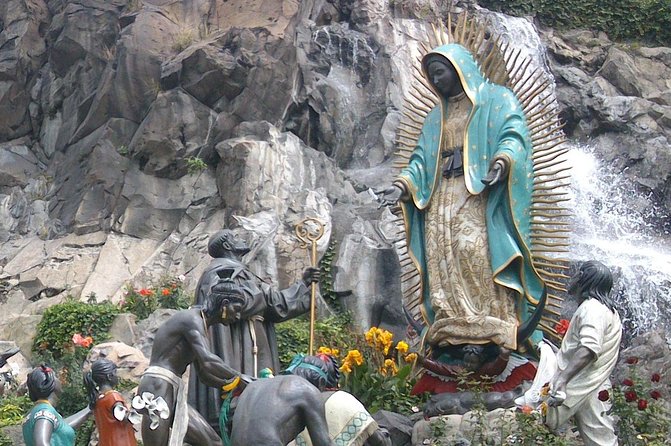
Guadalupe Shrine is one of those places where faith, art, and Mexican identity all meet in the same real-world space. The story starts in 1531 on Tepeyac Hill, and ends today with one of the world’s biggest Catholic pilgrimage sites, Basílica de Santa María de Guadalupe.
I love the way this tour gives you easy entry and a guided flow instead of wandering through a huge complex on your own. I also like that you see Basílica Antigua and Basílica Nueva with context, not just a quick look and a rush out the door. One possible drawback: this is built around a late-afternoon start, so if you want extra wandering beyond the main stops, you may feel a bit time-tight.
Why Guadalupe Shrine is such a big deal in Mexico City
This tour works because it treats the shrine like both a spiritual destination and a cultural landmark. You are not just looking at buildings. You’re learning how the Lady of Guadalupe story shaped devotion, Spanish colonial-era art, and how millions of people move through this site every year.
Key things I’d plan around before you go
- A prebooked spot helps you skip hassle when entry and timing can feel chaotic.
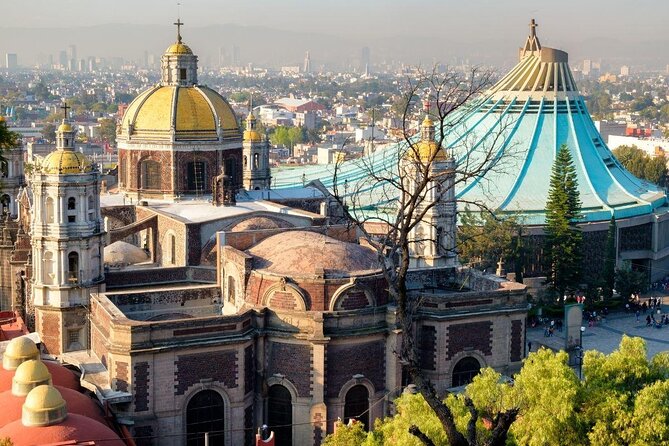
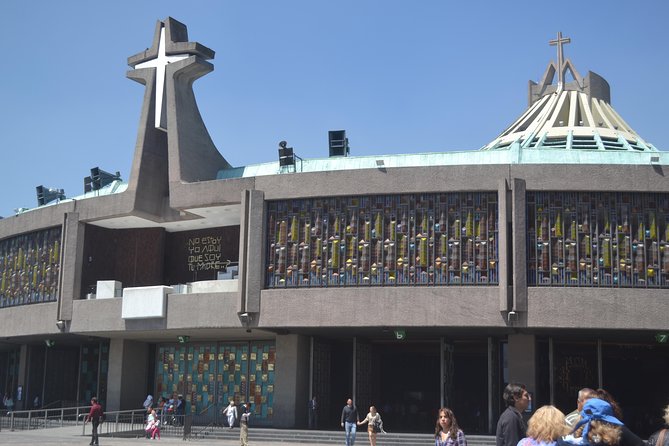
- Two basilicas in one visit means you get Old Guadalupe (1709) and New Guadalupe (1976), with very different designs.
- Tepeyac Hill is part of the story, and it does involve a moderate climb.
- A museum stop adds context with 17th-century religious art held behind the Old Basilica.
- Your guide sets the pace and answers the questions so you understand what you’re seeing.
- You get free time at the end, so you can attend mass or stroll.
More days out of Mexico City:
- Teotihuacan, Guadalupe Shrine & Tlatelolco Day Tour with Lunch
★ 5.0 · 11,603 reviews - Xochimilco, Coyoacan and Frida Kahlo with Optional Lunch
★ 4.5 · 7,320 reviews - Balloon flight + Breakfast in cave + Pyramids + Pick up CDMX.
★ 5.0 · 6,335 reviews
Meet at Hostal Amigo, then ride out to Basílica de Guadalupe
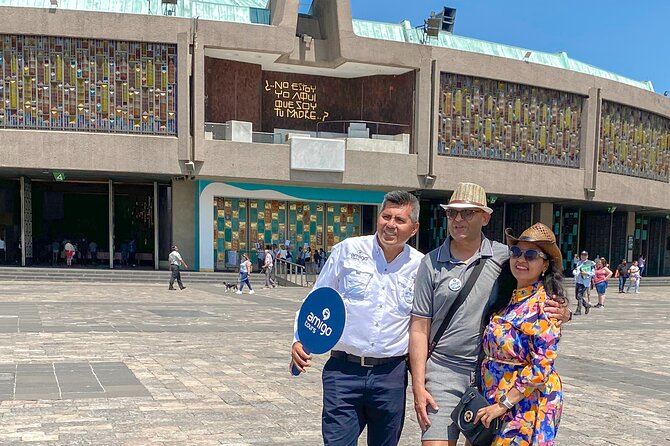
Your experience starts in Mexico City’s Centro Histórico at Hostal Amigo, Isabel La Católica 61-A. The tour begins at 3:00 pm and runs about 4 hours. If you select the private option, hotel pickup can be arranged, otherwise you’ll meet at the meeting point.
Then you’re on your way by comfortable vehicle to the northern edge of Mexico City, where the shrine complex sits. I like starting with transportation because it lowers the mental load. You don’t have to solve transit timing, tickets, and where to go in a crowd.
Also, this isn’t a giant cattle-drive style tour. The group size has a maximum of 20 travelers. That usually makes it easier to ask questions and keep your bearings without yelling across the aisle.
Basílica Antigua (1709): Moorish-leaning Spanish colonial architecture and the tilma story
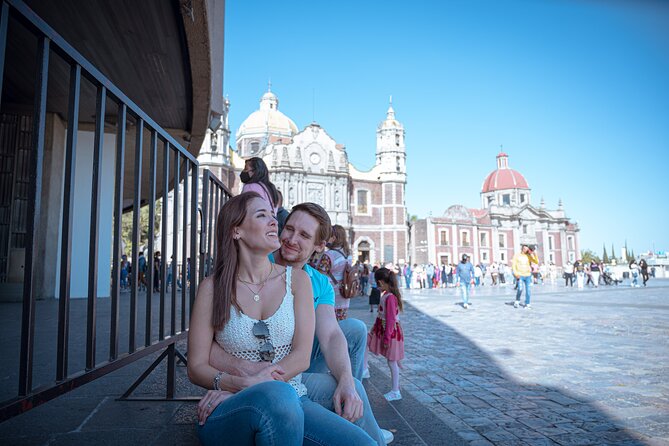
The first major stop is Basílica Antigua, the older basilica built in 1709. This is where the shrine leans heavily into the Spanish colonial look, with Moorish influence adding that extra twist you won’t get at every church in the city.
Inside, the key focal points are the devotional artworks and the famed image associated with the miracle story. The tour framing makes it easier to connect the dots. You learn that the appearance is said to have happened on Tepeyac Hill in 1531, and that the miraculous imprint is believed to be connected to the tilma, the cloak, of Juan Diego.
Here’s why this stop is more than just “go see the famous image.” Old Guadalupe is the bridge between early colonial-era religious art and the later devotion that turned this into a major pilgrimage center. Even if you’re not religious, you can still appreciate how art functioned as both message and memory.
One practical tip: take a slow lap early. The older basilica can feel crowded at moments, and you’ll get more out of it if you first see the main layout without rushing. Then, when you settle, you can focus on the details your guide points out.
Basílica Nueva (1976): why the circular design changes how you experience the Virgin
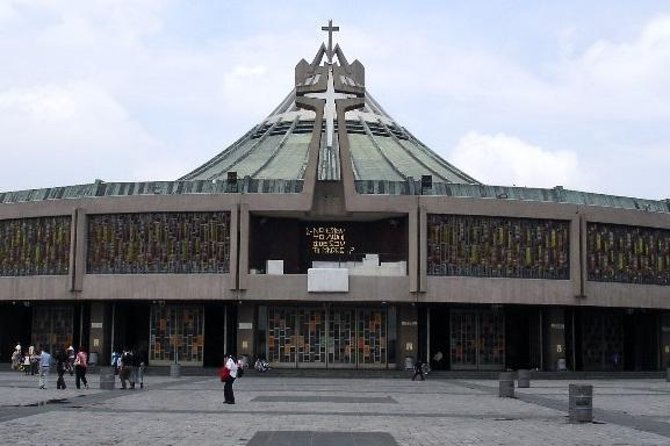
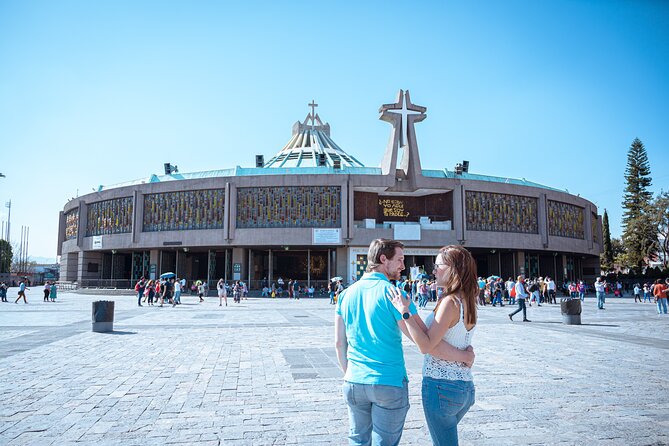
Next comes Basílica Nueva, completed in 1976. The standout here is its circular floor plan, which gives you a view of the Virgin from many spots inside the church.
That design matters because it shapes the flow of the crowd. People aren’t just lined up like they’re waiting for a performance. They are moving through a shared space where the viewpoint shifts depending on where you stand. It can feel almost ritual-like, even as you’re simply observing.
You’ll also see pilgrims stream into the main aisle, including older visitors who treat the visit as a once-in-a-lifetime journey. Whether you’re there for mass, for photography, or for cultural context, this is the moment where the shrine stops feeling like a historical site and starts feeling like a living place.
The tour also covers the importance of the Virgin of Guadalupe in Mexican culture, both as a religious figure and as a broad cultural symbol. That matters because it helps you interpret what you’re seeing, not just where you’re standing.
Something else to do with a Mexico City day:
- Teotihuacan pyramids morning or afternoon without tourist traps
★ 5.0 · 6,186 reviews - Teotihuacan Early Access Guided Tour with optional Lunch
★ 4.5 · 6,138 reviews - Balloon flight + pick up in CDMX + Breakfast in Cave + Pyramids
★ 5.0 · 5,651 reviews - Balloon Flight + Cave Breakfast + Pick Up from CDMX or We Fly
★ 5.0 · 4,410 reviews
Tepeyac Hill climb: pacing the moderate climb and using the views
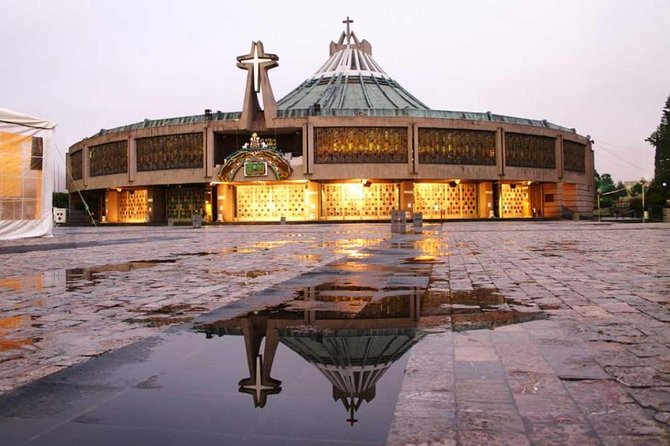
After the basilicas, you head up Tepeyac Hill, where the events in the Guadalupe story are said to have begun. The tour notes a moderate physical fitness level, and you should expect an actual climb.
I like this inclusion because it grounds the shrine in geography. You can’t fully understand why the basilicas feel so meaningful without connecting them back to the hillside where the apparition is said to have happened.
Pacing is key. If you take your time on the steps and stop when you need to, you’ll enjoy the views more instead of treating it like a chore. The hill area is also where the shrine’s layout makes sense, because the complex stretches out around the story’s origin point.
If you’re traveling with someone who needs easier routes, pay attention to the fact that some guides have accommodated mobility needs by finding the easier paths. That doesn’t mean every part is effortless, but it suggests your guide may be thinking about routes, not just a strict script.
The museum behind the Old Basilica: 17th-century religious art for extra context
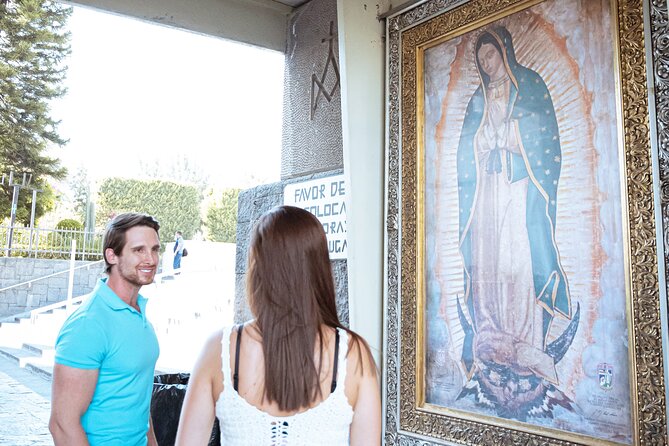
Between the Old Basilica’s spaces, the tour includes a museum stop behind Basílica Antigua. The museum houses 4,000 pieces of 17th-century religious art.
This is one of the best value-adds in the whole experience because it slows you down in the right way. A famous religious site can turn into a “check the box” moment if you’re only chasing the headline image. The museum helps you understand the visual language of the era, how devotion was expressed through objects and paintings, and how the church’s artistic world grew around the miracle story.
Also, the museum stop gives you a chance to regroup. Even with a guide, basilicas and crowds can be mentally heavy. A more contained museum pace can make the visit feel more complete.
The good news: the tour data indicates the relevant admission ticket for this portion is free. So you’re not adding surprises to your budget once you’re there.
How the 4-hour plan really feels, and where timing can pinch
This tour starts at 3:00 pm and runs about 4 hours. That late-afternoon timing has a tradeoff: it can work well if you want a focused, guided arc and then a quieter evening after. But if you love hanging around the shrine area longer than planned, you may find your time constrained.
You also want to consider that some areas close in late afternoon. So if your dream is to see every chapel, every corner church, and spend a long session on the hill, you may need an earlier start in a different format.
On the upside, your plan is designed to prevent aimless wandering. You get transported in, you visit the two basilicas, you climb Tepeyac Hill, you include the museum, and you finish with free time for mass or strolling before you’re taken back to your meeting point.
What you get for $51: value, not just sightseeing
At $51 per person, this tour isn’t the cheapest way to get to Guadalupe, but it’s also not overpriced for what’s included. You’re paying for:
- A professional guide who explains the miracle story, the architecture, and the cultural meaning.
- Round-trip transportation, with hotel pickup only for the private option.
- A visit that includes the Old Basilica, New Basilica, Tepeyac Hill, and the museum context behind the Old Basilica.
For me, the value comes from reducing the biggest risk in Mexico City day plans: wasting time getting from A to B and then trying to decode a huge site in a crowd. Here, that work is handled for you.
Also, this attraction is extremely popular. Prebooking (and showing up with a plan) helps you avoid the stress of figuring out entry and timing on the fly. If you only have one afternoon in the city for something this iconic, it’s a sensible use of time.
Food is not included, so budget for a meal afterward. That’s actually a good thing, because it keeps your tour from turning into a slow, stop-and-start lunch detour.
Who should book this Guadalupe Shrine tour, and who might skip it
This tour is a strong fit if you want your visit to feel organized and meaningful. You’ll likely enjoy it most if you care about explanation, not just photos. It’s also a good choice for first-time Mexico City visitors who don’t want to figure out logistics while surrounded by crowds.
It’s also worth it if you want the hill and the museum, because those are the two parts that often get cut when people do a quick self-guided visit.
You might consider skipping (or adjusting expectations) if you want a lot of extra free time around the complex beyond the main stops. With a late-afternoon start, you may feel a little pressure to stick to the schedule, especially if you’re the type who likes lingering.
Finally, if you have mobility concerns, the tour notes a moderate fitness level due to the climb. You can still go, but plan to move slowly and ask your guide about the easiest route options.
Should you book this Guadalupe Shrine tour?
If you want a well-paced introduction to one of the most important pilgrimage sites in the world, I’d book it. The combination of two basilicas, the Tepeyac Hill story location, and the museum with 17th-century religious art gives you more understanding than the headline alone.
If you’re traveling with limited mobility or you strongly prefer early starts to maximize time in the area, you’ll want to think carefully about whether a 3:00 pm departure matches your goals. But for a focused half-day plan with a guide and round-trip transport, this is a solid, straightforward way to do Guadalupe.
FAQ
What time does the Guadalupe Shrine tour start?
The tour starts at 3:00 pm and runs for about 4 hours.
How much does the tour cost?
The price is $51.00 per person.
Is hotel pickup included?
Hotel pick up is only available if you select the private tour. Otherwise, you meet at the listed start location.
Where do we meet the guide?
You meet at Hostal Amigo, Isabel La Católica 61-A, Centro Histórico de la Cdad. de México, Centro, Cuauhtémoc, 06000 Ciudad de México, CDMX, Mexico.
What language is the tour offered in?
The tour is offered in English.
Is the museum admission included?
The tour’s included stops indicate admission ticket free for the guided visit that covers the museum behind the Old Basilica.
Will I have time for mass or personal exploration?
Yes. The tour includes free time at the end where you can attend mass or stroll on your own.
Is the climb on Tepeyac Hill difficult?
The tour lists a moderate physical fitness level requirement, because you will walk up Tepeyac Hill.
Can I cancel for a full refund?
Yes. Free cancellation is available if you cancel up to 24 hours in advance of the experience start time for a full refund.
New reviews in from Mexico City
- Walking Tour in Historic Center CDMX★ 5.0 · 50 reviews
- Teotihuacan Pyramids and La Gruta Restaurant★ 5.0 · 50 reviews
- Sunrise Balloon Flight over Teotihuacan and Breakfast in Cueva★ 5.0 · 50 reviews
- Teotihuacan Private Tour, Cave Breakfast and Transportation★ 5.0 · 51 reviews
- Eat in a local house & access to restricted areas in Teotihuacan★ 5.0 · 51 reviews
- Guided tour to Teotihuacan, Basilica, Cave Breakfast and Pickup★ 5.0 · 52 reviews
- Museum of Anthropology: a look at Mexico’s past★ 5.0 · 52 reviews
- Coyoacán and Xochimilco including Frida Kahlo Museum★ 4.0 · 52 reviews
Mexico City Tours, compared.
Teotihuacan, Guadalupe Shrine & Tlatelolco Day Tour with Lunch
Read our review →
Xochimilco, Coyoacan and Frida Kahlo with Optional Lunch
Read our review →
Balloon flight + Breakfast in cave + Pyramids + Pick up CDMX.
Read our review →
Teotihuacan pyramids morning or afternoon without tourist traps
Read our review →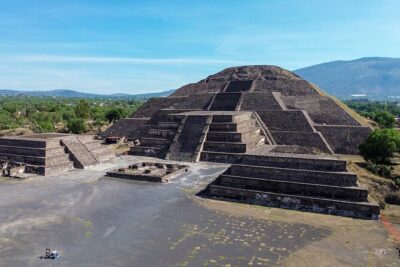
Teotihuacan Early Access Guided Tour with optional Lunch
Read our review →
Balloon flight + pick up in CDMX + Breakfast in Cave + Pyramids
Read our review →
Teotihuacan & Guadalupe Shrine Tour with Lunch
Read our review →