
Reviewed · HISTORICAL TOURS
Gay Side of History through Plazas & Temples
If you like history with a point of view, this Mexico City walking tour is interesting because it ties today’s streets to older power, religion, and queer survival. I love the digital LGBT+ map that keeps you oriented, and I love the rooftop start at Librería Porrúa with views toward major ruins. One possible drawback: it packs a lot of meaning into a 3.5 hour walk, including heavy topics tied to the Spanish Inquisition, so wear comfortable shoes and be ready for serious history.
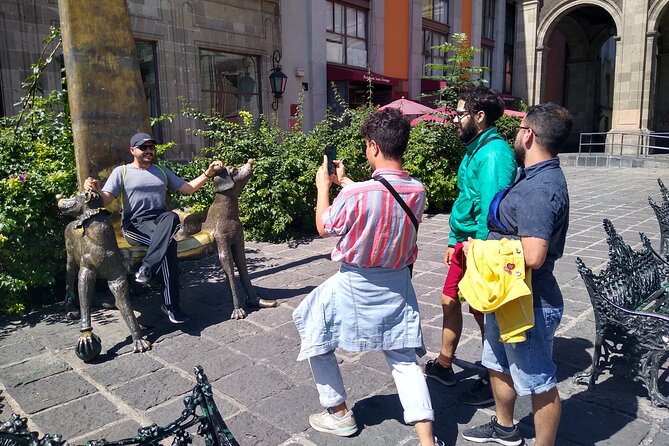
The tour is small, up to 10 people, and it moves at a human pace. You also get bottled water plus coffee and/or tea, and you leave with downloadable PDFs you can reread later when you want context again.
If you’re the kind of traveler who gets restless on long museum tours, you might still enjoy this because it’s mostly outdoors and plaza-to-plaza. Just plan for about 1 mile of walking, plus standing time at viewpoints.
Key highlights worth your attention
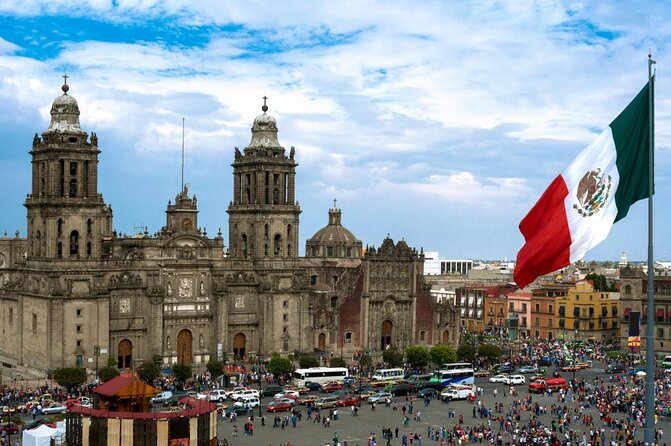
- Rooftop viewpoint at Librería Porrúa overlooking key landmarks, including Templo Mayor ruins
- Digital LGBT+ map plus extra resources to continue learning after the tour
- Small group format (max 10), which makes questions feel possible
- Curated LGBT+ lens across big sites like Zócalo, the cathedral area, and Santo Domingo plaza
- PDF take-home learning with RAINBOW MEXICO for your next museum day
- Coffee, tea, and bottled water included, so you start the walk fueled
Entering Mexico City’s gay side of history, one plaza at a time
Mexico City’s Historic Center can feel like one long postcard. This tour doesn’t deny that beauty. It uses that beauty to ask a harder question: who got power here, who was punished, and how queer life kept finding ways to exist?
You’ll spend about 3 hours 30 minutes on foot, mostly in the center. The pace is steady, not sprinting. The distance is listed as about 1 mile in that time, which usually works fine for people with moderate fitness, as long as you’re okay with frequent stops for stories.
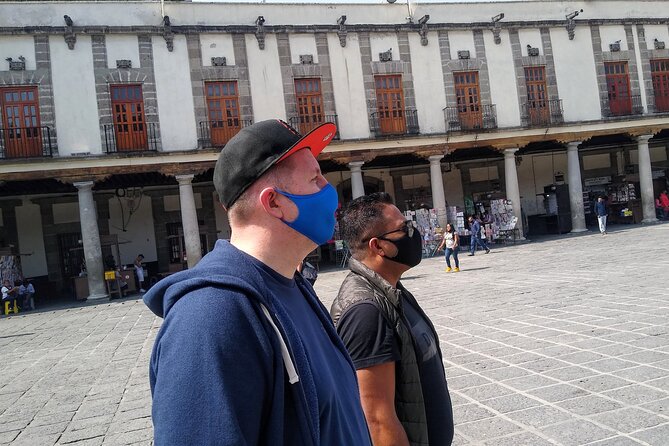
This is also an adult-only experience, minimum age 18. And it runs in all weather conditions, so your outfit matters more than you might expect.
More Historical Tours in Mexico City
- Historic Downtown Walking Tour
★ 5.0 · 1,289 reviews - Historic Center Food Tour in Mexico City
★ 5.0 · 1,263 reviews - Mexico City: Historic Downtown Walking Tour
★ 4.8 · 1,039 reviews
Start at Librería Porrúa, coffee with a view toward Templo Mayor
The tour begins at República de Argentina 15 in the Centro Histórico, with a start time of 10:00 am. Your first stop is Librería Porrúa, where you head up to a rooftop balcony.
This is a smart way to open. Before you start walking, you’re given a “big picture” view that points your brain toward what you’ll see later. From the balcony, you look out toward the Palace of the Royal Duty, Frida Kahlo’s hideaway rooms, and the Great Aztec Temple ruins (Templo Mayor). Even if you already know the names, seeing them in one sweep makes the rest of the tour click.
You’ll spend about an hour here, and admission is included for this stop. You also get bottled water plus coffee and/or tea as part of the experience. That alone is a value win, because the center can burn up your budget on quick drinks and snacks.
The main practical consideration at this stage: rooftop balcony time means sun and wind. Bring sunglasses and a light layer if you get cold easily.
Templo Mayor to the Metropolitan Cathedral, where faith and empire overlap
After the rooftop briefing, the tour focuses on two of the center’s loudest landmarks: the Templo Mayor area and the Metropolitan Cathedral of the Assumption.
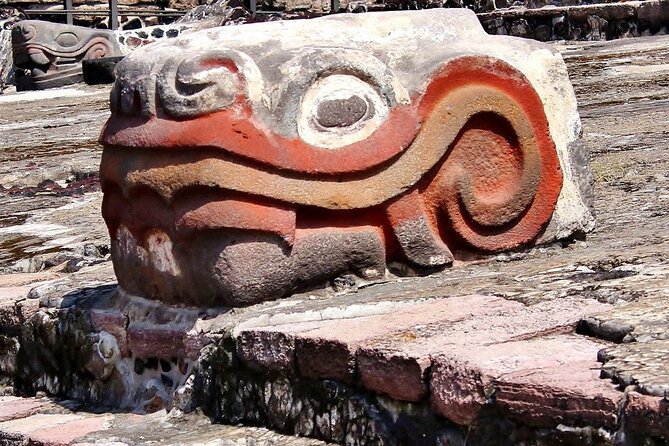
Templo Mayor is the main temple of the Mexica people, the group commonly linked with what people casually call Aztecs. Here, the guide connects place to time, showing how conquest and religion changed what the city valued and what it erased. This is not only “look at ruins” tourism. It’s about how power gets written into stone, then later overwritten with new institutions.
Then you move to the Metropolitan Cathedral of the Assumption of the Most Blessed Virgin Mary into Heaven, the cathedral of the Catholic Archdiocese of Mexico. The cathedral is famous for its grandeur, but the tour’s angle is different. You’ll be looking at it as a symbol of how colonial Catholic authority took root in public life.
A balanced note for you: if you prefer upbeat stories only, this section may feel intense. You’re not skimming the topic of persecution. The tour builds toward that theme as you go.
Zócalo and the National Palace, the city’s political heartbeat
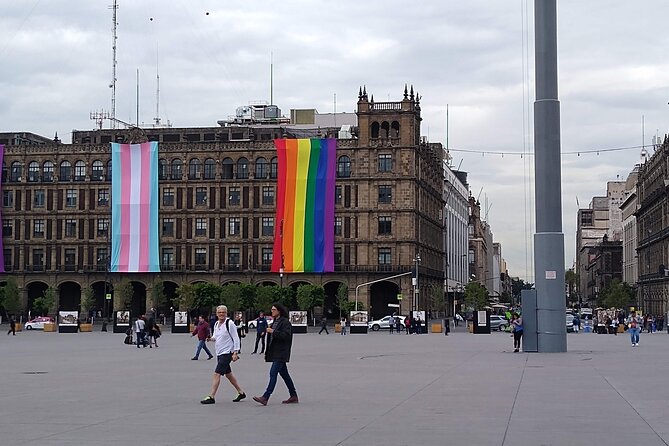
Next, you head to the Zócalo, Mexico City’s central plaza. This stop is about 30 minutes, and it’s free. Even without a tour, the Zócalo is the kind of place where you can hear history in the crowd.
On this route, you use the Zócalo as a reference point for Mexican civic identity. Since it has been a meeting place since the 16th century, it gives you an instant timeline of how the city’s center has kept redefined itself.
Then the tour brings you to the National Palace (Palacio Nacional), the seat of Mexico’s federal executive. Since 2018, it has also served as the official residence for the President of Mexico.
Why that matters in a gay history tour: you’re tracing how official narratives get staged in the same public square where everyone passes. Even if you can’t see everything from ground level, the point is to help you “read” the city. You start noticing how political power and public space share the same walls.
Something else to do with a Mexico City day:
- Teotihuacan, Guadalupe Shrine & Tlatelolco Day Tour with Lunch
★ 5.0 · 11,603 reviews - Xochimilco, Coyoacan and Frida Kahlo with Optional Lunch
★ 4.5 · 7,320 reviews - Balloon flight + Breakfast in cave + Pyramids + Pick up CDMX.
★ 5.0 · 6,335 reviews - Teotihuacan pyramids morning or afternoon without tourist traps
★ 5.0 · 6,186 reviews
Centro Cultural de España and the old mansion behind the Cathedral
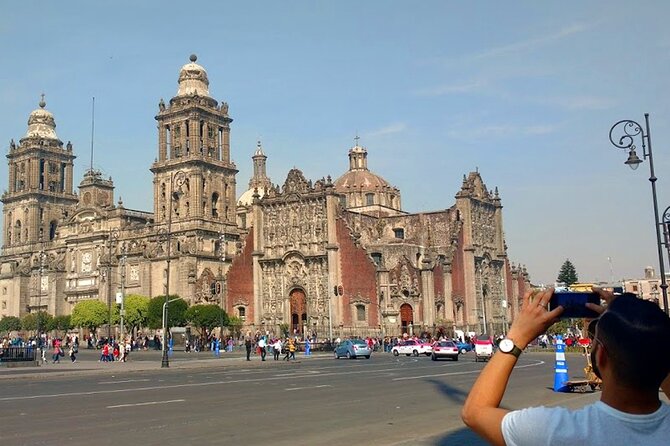
From the political center, the tour shifts into architecture and transformation at the Centro Cultural de España en México. This stop is also about 30 minutes and is free.
The location matters: it’s at 18 Guatemala Street, just behind the Cathedral area. The tour highlights the story of how an old mansion ended up in ruins in the late 1990s. Then the Mexico City government ceded it to the Spanish government, and restoration followed. The center was inaugurated in 2002 with a Spanish king and the President of Mexico in attendance.
I like this kind of stop because it shows that history isn’t a straight line. Even buildings can get repurposed, and that affects how you experience the present.
You’ll also get a sense of the surrounding streets, because the Cultural Center sits close enough to the Cathedral zone that your mental map from earlier stops stays useful. This section can be a good reset if your feet are tired, since it’s not all standing in a single harsh sun patch.
Old Customs Building and Plaza Santo Domingo, scribes, printing, and memory
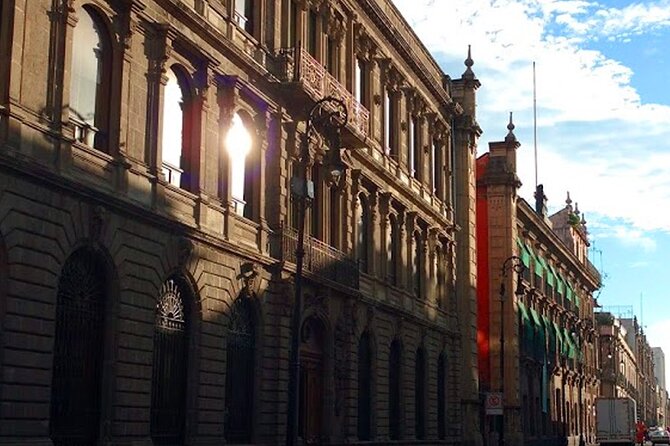
The walk continues toward the Old Customs Building, located on the east side of Santo Domingo Plaza, between República de Venezuela and Luis González Obregón streets, just north of the main plaza.
Then you reach Plaza de Santo Domingo, another 30 minute stop and free. This is where the tour gets more atmospheric, not less.
On the west side of the plaza you’ll see Portal de Evangelistas, a Tuscan colonnade with round arches. The tour points out the working vibe there, including scribes at typewriters and antique printing machines. It’s one of those places where the city doesn’t pretend it’s frozen in time. People still create and print right in the middle of old stone.
This stop is more than pretty. It’s the stage for the tour’s darker historic thread. The guide connects the Spanish Inquisition to civilian persecution of homosexuals between 1521 and 1821. Hearing that range while you stand in the same historic zone forces your brain to accept that queer persecution wasn’t just a rumor from far away. It was structured, official, and long-lasting.
And then comes another layer tied to movement and safety. The tour connects the Church of Santo Domingo with El Camino Real, described as a trade route and a safe haven for gay male couples. That’s the kind of claim you’ll want to think about, not just repeat. Either way, it frames the story around how queer life adapted to routes, spaces, and community networks.
If you’re sensitive to topics of persecution, give yourself a moment here. The plaza may look lively, but the meaning in the tour is not light.
A take-home learning package: map, PDFs, and your own follow-up route
One of the best values in this experience is that it doesn’t stop when the tour ends.
You get a digital LGBT+ map of the Historic Center plus extra resources. That matters because Mexico City is big, and your first day can feel like sensory overload. With the map, you can reconnect the story to the street grid later, instead of trusting your memory to stay perfect.
You also get a downloadable PDF copy of RAINBOW MEXICO. Having it as a PDF is practical: it loads quickly on a phone or tablet, and it works for hotel downtime or for the next day’s reading when you want more context than what fits into a 3.5 hour walk.
I also appreciate the basics being handled. Coffee and/or tea are included, plus bottled water. In the Historic Center, that kind of inclusion removes one extra decision from your day.
What the itinerary actually feels like on your feet
The tour is built for a “stop and story” rhythm. You’ll start with a viewpoint hour at Librería Porrúa, then you’ll move between major landmarks, with time built in for Zócalo and Centro Cultural España.
Even though the walk distance is listed as about 1 mile, don’t treat that as “quick.” Historic center tours often mean a lot of standing, plus occasional slowdowns to keep the group together and to absorb explanations.
The experience is designed for a moderate physical fitness level. If you’re someone who hates slow pacing or long standing, you might find the time drags in the plaza sections. If you’re okay with a steady walking pace and frequent stops to look up and listen, it’s a comfortable fit.
Also note the group size: maximum 10 travelers. That small size tends to help you ask questions without feeling like you’re shouting into a crowd.
Price and value: what you pay for, and why it adds up
At $99 per person for about 3 hours 30 minutes, you’re paying for more than a stroll. You’re paying for focused storytelling tied to specific sites, plus a research-based package you keep.
Here’s where the value shows up:
- Admission is included for the Librería Porrúa rooftop stop, not just a generic guide walking beside you.
- Free stops like Zócalo and the Cultural Center keep your costs predictable once you arrive.
- Included drinks and water take care of your immediate comfort needs.
- The digital map and PDF extend the tour beyond the walking time, so you’re not just buying a single afternoon.
One more practical value point: this tour is commonly booked in advance (about 15 days on average). If you want a specific date, don’t wait until the last minute.
Who should book this Mexico City gay history walking tour
This tour is a strong fit if you:
- want LGBT+ history placed directly in real neighborhoods, not only in distant museums
- like learning from a guide who ties landmarks to social change, persecution, and survival
- value having tools you keep, like the digital map and the RAINBOW MEXICO PDF
It’s also a solid option for allies who want historical context from an LGBT+ lens. The stories are serious, but the approach is designed to be engaging rather than lecture-only.
If you dislike heavy historical topics, or if you prefer pure sightseeing with no persecution themes, you might feel this is too intense for your mood. The tour covers the Spanish Inquisition’s actions, and that will shape the tone.
Should you book it? My practical verdict
Book this if you want a Mexico City day that feels more like a guided reading of the streets than a checklist of monuments. The rooftop start at Librería Porrúa plus the map and PDF follow-through are real perks, and the small group size helps keep it personal.
Don’t book it if you’re trying to keep the day light and airy, or if long standing in historic plazas sounds miserable. This is history with a point of view, and it takes itself seriously.
If you’re on the fence, I’d choose it as one of your first Historic Center experiences. The orientation from the map and the stories tied to Zócalo and Santo Domingo make your future exploring smarter.
FAQ
How long is the tour?
The tour lasts about 3 hours 30 minutes.
Where do I meet, and where does the tour end?
You start at República de Argentina 15 in Mexico City’s Centro Histórico. The tour ends at Antiguo Palacio de la Santa Inquisición at República de Brasil 33, in the same historic center area.
What is the group size?
The tour has a maximum of 10 travelers.
Is the tour in English?
Yes. The tour is offered in English.
How much walking is involved?
You will walk about 1 mile in around 3 hours, and you should have a moderate physical fitness level.
What is included in the price?
Local guide, coffee and/or tea, bottled water, a digital LGBT+ map with extra resources, and a downloadable PDF copy of RAINBOW MEXICO.
Are entrance fees included at the stops?
Admission is included for the Librería Porrúa stop. Other stops listed like Zócalo, Centro Cultural España, and Plaza de Santo Domingo are free.
Does the tour run in bad weather?
Yes, it operates in all weather conditions. You should dress appropriately.
Can I get a refund if I cancel?
Yes. You can cancel for free up to 24 hours in advance for a full refund. If you cancel less than 24 hours before the start time, the amount paid is not refunded.
New reviews in from Mexico City
- Walking Tour in Historic Center CDMX★ 5.0 · 50 reviews
- Teotihuacan Pyramids and La Gruta Restaurant★ 5.0 · 50 reviews
- Sunrise Balloon Flight over Teotihuacan and Breakfast in Cueva★ 5.0 · 50 reviews
- Teotihuacan Private Tour, Cave Breakfast and Transportation★ 5.0 · 51 reviews
- Eat in a local house & access to restricted areas in Teotihuacan★ 5.0 · 51 reviews
- Guided tour to Teotihuacan, Basilica, Cave Breakfast and Pickup★ 5.0 · 52 reviews
- Museum of Anthropology: a look at Mexico’s past★ 5.0 · 52 reviews
- Coyoacán and Xochimilco including Frida Kahlo Museum★ 4.0 · 52 reviews
Historical Tours, compared.


Mexico City Historical Centre Food Tour with 7 Authentic Tastings
Read our review →
Historical and Cultural Walking Tour of San Miguel de Allende
Read our review →
Historical and Cultural Walking Tour of San José del Cabo
Read our review →
Walking Tour in Mexico City for Exploring their Cultural Heritage
Read our review →Browse the lists this tour appears in