Reviewed · HISTORICAL TOURS
Walking Tour of the Historic Center of Mexico City
The Historic Center of Mexico City is the kind of place where you can’t really see the whole story from just one postcard. This tour is interesting because it strings together the biggest power squares, the pre-Hispanic ruins next door, and the art and politics of modern Mexico in one smooth walking loop.
I like that the pacing is built for orientation. In about 3 hours, you get a clear sense of where everything sits and how different eras overlap in Centro Histórico. I also like the mix of stops with very different vibes, from the open square atmosphere of the Zócalo to the indoor Diego Rivera mural experience at the Ministry of Education building.
One possible drawback: it is a lot of walking on city surfaces, and there are limited places to sit along the route. If altitude and cobblestones slow you down, the group pace can feel a bit tight.
Key highlights you will actually feel
- Max group size of 10 means less getting lost and easier questions to the guide
- Multiple included stops (Museo Vivo del Muralismo and Ventana Arqueológica) keep your time efficient
- Diego Rivera mural focus inside the Ministry of Education gives you a strong art-history anchor
- Pre-Hispanic and colonial side-by-side at the Templo Mayor area helps the timeline click
- Regular photo-friendly landmarks like Bellas Artes and the House of Tiles without long museum detours
- Rest-and-talk moments at Plaza Tolsa help break up the walking and connect history to daily culture
Meeting point, small-group feel, and how the 3-hour route works
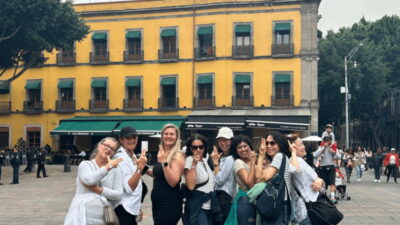
You start at Plaza de la Constitución (Zócalo). It is the easiest place to orient yourself in Mexico City, and it sets the tone right away: this is where politics, religion, commerce, and everyday life all bump into each other.
The tour runs about 3 hours, and the group stays small, with a maximum of 10 travelers. That size matters because Mexico City’s historic streets can be busy. A small group keeps you from constantly getting swallowed by crowds, and it also helps the guide manage questions at the stops.
Expect a real walking tour, not a sit-and-stroll event. One review pointed out that if you are not used to the altitude, you may want more places to rest, so plan for that. Another review noted cobblestones can slow a group down, especially if anyone needs extra time stepping carefully.
You also have a practical touch here: you use a mobile ticket, and the tour is offered in English. That combination makes it simpler to check in and keep moving instead of hunting for paperwork.
Finally, this tour ends near Bellas Artes and the House of Tiles area. So you finish right where you will probably want to wander on your own after the guided portion.
More City Tours in Mexico City
- Mexico City: Teotihuacan, Tlatelolco & Guadalupe Shrine Tour
★ 4.6 · 3,773 reviews - Teotihuacan Hot Air Balloon Flight from Mexico City / Volare
★ 5.0 · 3,262 reviews - Teotihuacan Private Tour from Mexico City
★ 5.0 · 1,890 reviews
Start at the Zócalo: where Mexico City makes its first big impression
The walk begins in the main square, the Zócalo, surrounded by major landmarks. You will look toward the National Palace and the Supreme Court of Justice, plus you will spot silversmith shops nearby.
Why this stop is valuable: the Zócalo is not just a pretty plaza. It is a living stage for how Mexico City organizes power and public life. Even if you only know a little history, the layout helps your brain understand why later buildings and streets matter.
You will spend about 15 minutes here, and it is usually the right amount of time for an overview without turning into a lecture. You are also watching the square rather than being trapped in it, so you get atmosphere and orientation.
Practical note: the Zócalo area can be crowded, and shade can be limited depending on the time of day. If you go in hot sun, bring water and be ready for that early start energy.
Catedral Metropolitana and the Templo Mayor area: timeline lessons in real space
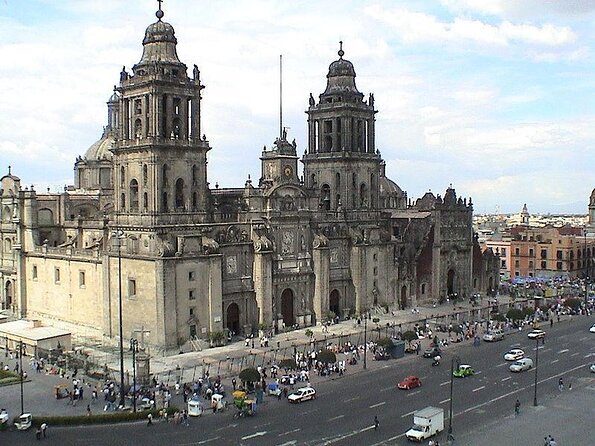
Next comes the Catedral Metropolitana de la Ciudad de Mexico. You see it from the outside, with explanations about construction history and why the design carries both Baroque and neoclassical features. Admission is not included for this stop, and the time is brief, around 10 minutes.
I like outdoor cathedral stops on a walking tour like this because you keep the focus. You learn what to notice: massing, style mix, and why the cathedral sits where it does. It becomes a reference point as you move deeper into the Centro story.
Then you shift to the archaeological ruins of the Templo Mayor, outside and right in the city fabric. This is dedicated to rain and sun in the Mexica worldview, and you will learn why the site was central for the Mexicas, plus how the layout connects to the geography around it.
This is one of the most important parts of the tour for many first-timers. Seeing the cathedral next to a pre-Hispanic sacred space is a fast way to understand that Mexico City did not replace old stories, it layered them. In other words, you are not just learning dates, you are seeing how people reused and reinterpreted place.
Expect this to feel more like a “pause and look” stop than a museum moment, since the setting is outdoors and tucked near major streets.
Museo Vivo del Muralismo: Diego Rivera murals as political and social map
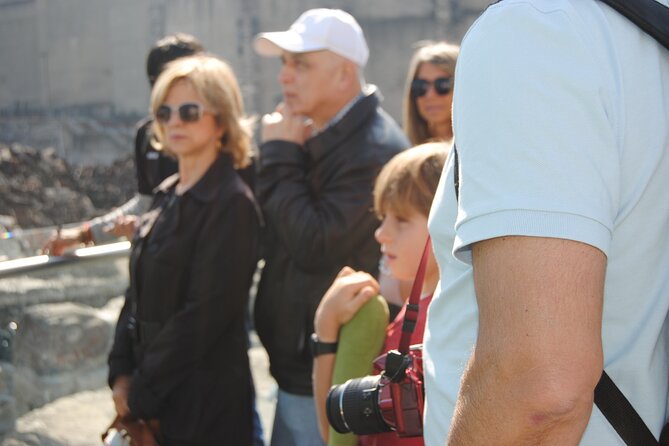
After the ruins and religious timeline, you move indoors to Museo Vivo del Muralismo. This is in the Ministry of Education building, and the highlight is that it houses about a third of the Diego Rivera murals painted across his career.
This stop is 25 minutes, and the admission ticket is included. That matters for your value because it saves time and keeps you from juggling extra entry steps while you are already doing a lot of walking.
What you are actually seeing goes beyond famous brushwork. You learn how the murals connect to festivals and traditions, social struggle, trade, and politics from the early 20th century. It is history taught through imagery you can read in layers: who is shown, what work is emphasized, and what the artists believed needed attention.
One review mentioned a guide being flexible and letting the group spend a few extra minutes in the courtyard to look at the murals more closely. That tells me the best guides on this tour care about giving you time to actually look, not just pass through.
If you have ever wondered why Mexican wall art feels so tied to daily life, this is a strong way to answer that. Rivera’s murals are not background decoration. They are visual arguments.
More Historical Tours in Mexico City
- Historic Downtown Walking Tour
★ 5.0 · 1,289 reviews - Historic Center Food Tour in Mexico City
★ 5.0 · 1,263 reviews - Mexico City: Historic Downtown Walking Tour
★ 4.8 · 1,039 reviews - Mexico City Historical Centre Food Tour with 7 Authentic Tastings
★ 5.0 · 723 reviews
Plaza de Santo Domingo and Plaza Tolsa: colonial trade, daily culture, and shade breaks
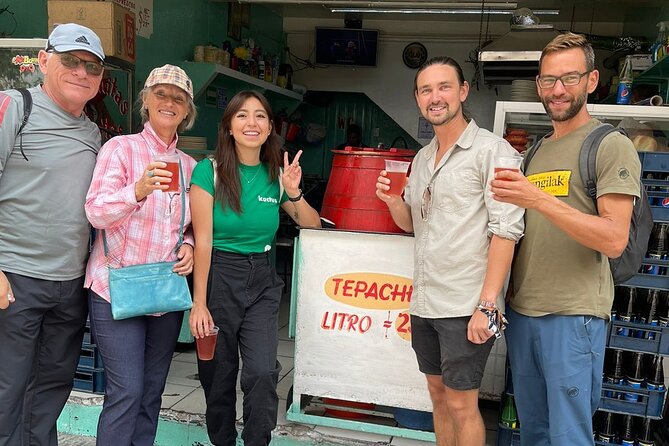
Next you head to Plaza de Santo Domingo, a square that witnessed key events of the viceroyalty of New Spain. You also hear stories tied to spice and product trade with Asia, the holy inquisition, and attempts by France to conquer Mexico.
Admission is free here, and the stop is about 15 minutes. That makes it a good “context stop,” where you learn what kind of forces shaped the colonial city, then you move on before it becomes too heavy.
After that, the tour shifts to Plaza Tolsa, which functions as a reset point. You rest in the shadows and the guide ties the sites to everyday themes, covering topics like indigenous languages, the tradition of the Day of the Dead, music, politics, and gastronomy.
This is also where you see the equestrian statue of Charles IV, nicknamed the little horse, plus you will spot the exterior of the National Museum of Art and the Mining Palace.
Why I like Plaza Tolsa on this itinerary: it is not just sightseeing. It is a chance to turn from monuments into culture. If you have been thinking about Mexico City as only “old buildings,” this part gently corrects that.
The statue and palace exteriors also give you recognizable shapes to remember later when you start self-guided wandering.
Ventana Arqueológica: the past under your feet, explained in minutes
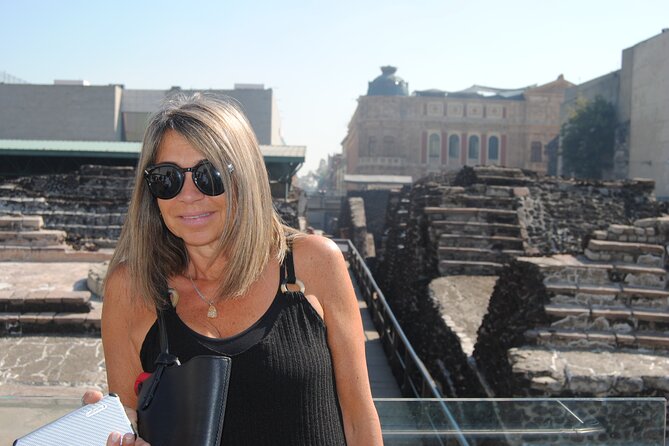
One of the cleverest stops is Ventana Arqueológica. You see the past under a street nearby, and you learn how it was found and why many buildings in the Centro area hide secrets beneath them.
The stop is short, about 5 minutes, and admission is included. That brevity is perfect here. You get the explanation and the meaning without losing too much time in a tight urban setup.
This is the kind of stop that pays off even after the tour ends. Once you understand what you are looking at, you start noticing how the city manages layers. Mexico City is constantly building, repairing, and reshaping. The ground is not a blank surface, it is a historical record.
Palacio de Bellas Artes and Palacio Postal: big art moments, then economics in architecture
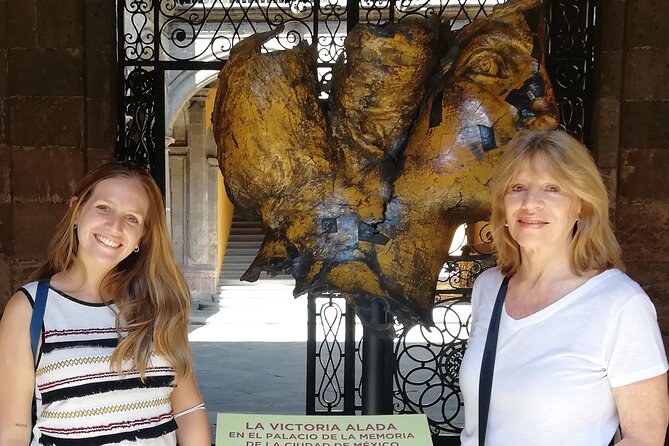
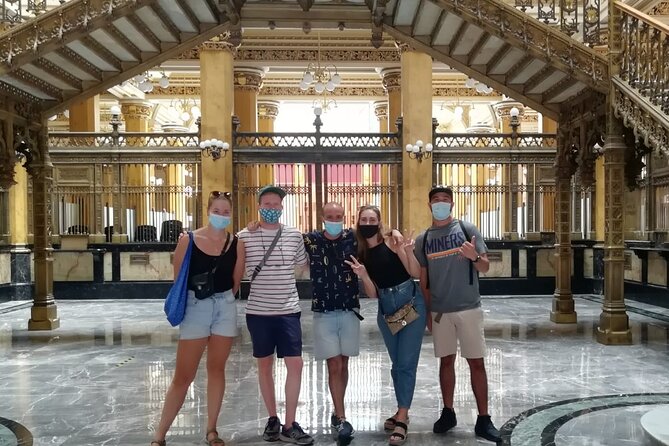
You then reach Palacio de Bellas Artes, one of the classic “must see” buildings in Mexico City. You get time for both exterior and interior viewing impressions, with about 15 minutes on the clock, and admission is free per the tour details.
This stop can feel almost too famous, but there is still a reason it hits: the building’s scale and design make it hard to stay detached. Even without going deep into architecture, you leave noticing details.
From there, you continue to Palacio Postal, still operating today. You learn the economic and political consequences of such a grand palace. This is shorter, about 10 minutes, and admission is not included.
I recommend using this as an architectural and civic read. The postal palace symbolizes how the city’s systems of exchange and power were expressed in stone and symmetry. It rounds out the tour so it is not only religious ruins and art murals, it also shows how “infrastructure” becomes identity.
House of Tiles: your last photo stop with a real reason to care
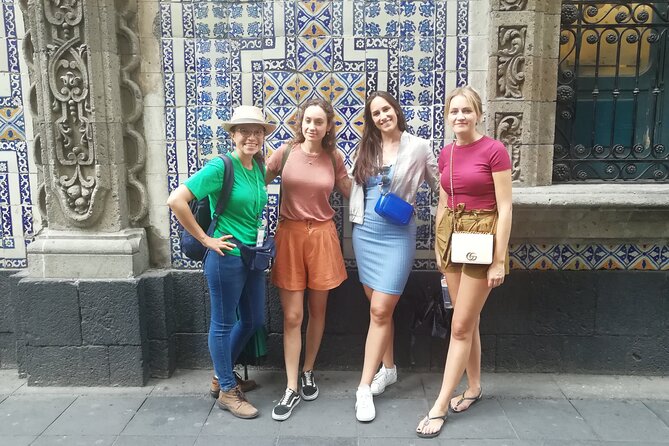
The final classic landmark is the House of Tiles, one of the most photographed spots in Centro. It is iconic for its tile façade, and you spend about 15 minutes here.
Admission is free per the tour details. That makes it a smart last stop, because you can take photos without feeling pressured by an extra ticket or a timed entry inside.
What I like about ending here is momentum. You finish right near both Bellas Artes and this tile house area, so you are not stranded after the tour. You can keep walking, snack, or head to the next neighborhood without needing to backtrack.
If you get the timing right, you can turn your guided orientation into your own flexible exploring.
Included tickets, what is extra, and how this tour delivers value
Here is the practical breakdown, because it helps you decide if this tour fits your style.
Included:
- Museo Vivo del Muralismo ticket (included)
- Ventana Arqueológica ticket (included)
Not included:
- Catedral Metropolitana (not included)
- Palacio Postal (not included)
Other stops are free by tour details, including Zócalo, Plaza de Santo Domingo, Plaza Tolsa, Bellas Artes, and the House of Tiles.
For me, that mix is what makes the itinerary feel efficient. You are not paying for many entries while already walking from stop to stop. You are also still getting at least two ticketed experiences where guided interpretation helps a lot.
What you do pay separately:
- Tips are not included, and that is normal for tours.
- Any food or sweets you choose to buy are not included, even though you may find options nearby.
So the real value question becomes this: do you want an organized, English guide story that connects multiple eras quickly? If yes, the included stops make it easier to say yes, because you get the most “worth your time” interpretation where it can be harder to self-navigate.
What to pack and how to keep the walking comfortable
Because this is a dense Centro loop, comfort matters. One review called out that there are not many places to sit, so bring what helps you handle that.
Bring:
- Water, especially if you are going in hot sun
- Sunscreen and a hat, since you will cross open areas like the Zócalo
- Comfortable shoes for cobblestones
If you get winded by altitude, slow your pace from the first block. Also know you will still want to take in details, so it helps to travel with a calm mindset rather than a checklist sprint.
A nice sign from the reviews is that good guides pay attention to comfort. One guide was praised for shade awareness and thoughtful street crossings. Another was praised for flexibility, giving the group extra minutes in the mural spaces. That is the kind of guiding style that makes the difference between seeing buildings and actually understanding them.
Which guides can you get, and how that affects your experience
The guiding style seems consistent even when the names change. You may see guides such as Fer, Fernanda, Gabby, Alexia, Eduardo, Luis, Thomas, Nat, Benjamin, Oscar, and Sara listed for different departures.
The common theme in the praise is storytelling plus practical attention. Several guides were described as engaging and friendly, with English that works well for first-time visitors. You can also spot a pattern: the better guides manage pace, answer lots of questions, and keep the tour from turning into a rushed conveyor belt.
If you want a tour that feels like a smart local friend giving context while you walk, this is the type of group experience that tends to deliver.
Should you book this Historic Center walking tour?
Book it if you want a fast, well-connected orientation to Mexico City’s historic core. This tour works especially well for first-timers because it links Zócalo, Templo Mayor, Diego Rivera murals, and the big art landmarks into one coherent route. The small group size, max 10, is also a big plus if you dislike big crowds.
Skip it or swap your plan if you know you will struggle with a lot of walking on uneven surfaces. With limited seating and cobblestones, you may need a slower pace than a 3-hour guided route can comfortably offer.
Overall, I think this is a smart, high-value introduction when you want context, not just photos. If your goal is to leave Centro understanding how Mexico’s pre-Hispanic and colonial eras sit side-by-side, and you still want world-famous art stops, this walking tour fits the bill.
FAQ
How long is the walking tour?
It runs for about 3 hours.
Is the tour offered in English?
Yes, the tour is offered in English.
What’s included in the ticket price?
The tour includes the walking portion and admission tickets for Museo Vivo del Muralismo and Ventana Arqueológica. Tips are not included, and admission for stops like Catedral Metropolitana and Palacio Postal is not included.
Where do I meet the guide, and where does the tour end?
The tour starts at Plaza de la Constitución and ends near the Palacio de Bellas Artes area and the House of Tiles, with the listed end location at Edificio Guardiola, Av. 5 de Mayo 1.
How large is the group?
The tour has a maximum of 10 travelers.
Is transportation or food included?
Transportation to the meeting point and any food or sweets are not included. The tour is near public transportation, though.
More Walking Tours in Mexico City
- Frida Kahlo VIP [Museum Tickets Included] Walk, Markets & Churros
★ 5.0 · 982 reviews - Anthropology Museum Private Experience Walking Tour
★ 5.0 · 355 reviews - Mexico City: Guided walking tour through the most historic parts of the city.
★ 4.5 · 172 reviews - Mexico City: Lucha Libre Show, Walking Tour & Tequila
★ 4.6 · 156 reviews
New reviews in from Mexico City
- Essence of Mexico: Authentic Mexican Cooking Class & Market Tour★ 5.0 · 289 reviews
- Teotihuacan Pyramids Morning Tour With Me, Angela!★ 5.0 · 290 reviews
- The City Green Exploring the Urban Eco Reserve of Xochimilco★ 5.0 · 290 reviews
- Mexico City E-Bike Tour with a taco and churros stop★ 5.0 · 292 reviews
- Teotihuacan Express Private tour from Mexico City★ 5.0 · 292 reviews
- Mexico City: Hidden Markets, Street Food & Salsa-Making Tour★ 5.0 · 310 reviews
- Xochimilco & Colonial Coyoacan Trip★ 4.0 · 312 reviews
- Street Food Tour with Friends★ 5.0 · 326 reviews
Historical Tours, compared.


Mexico City Historical Centre Food Tour with 7 Authentic Tastings
Read our review →
Historical and Cultural Walking Tour of San Miguel de Allende
Read our review →
Historical and Cultural Walking Tour of San José del Cabo
Read our review →
Historical & Cultural Walking Tour of San Miguel de Allende
Read our review →