
Reviewed · MONTE ALBAN & MITLA TOURS
Monte Albán, Arrazola, Cuilapam y San Bartolo Coyotepec.
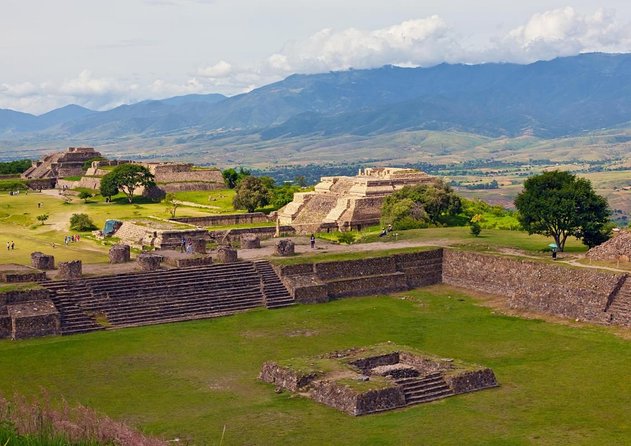
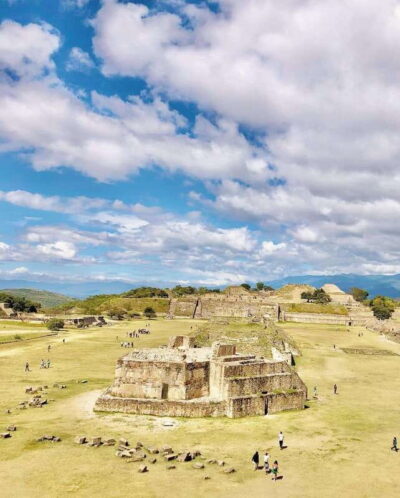
Monte Albán is the kind of place that grabs you fast, with UNESCO-grade Zapotec ruins plus knockout views over the Oaxaca Valley. I love the guided walk through Monte Albán’s plazas, tombs, and the I-shaped ball court. I also love that the day doesn’t end at ruins, you jump into Oaxaca craft culture with alebrijes and Oaxaca’s famous barro negro pottery. The main drawback to plan for is physical effort, you’ll climb stairs and walk more than you might expect in the sun.
The route is built for a full morning start, with hotel pickup and an air-conditioned coach. If you land with a guide like Antonio (an archaeologist type) or Gabriel (who often leans hard into history details), you’ll get the context that makes the stones feel alive. Still, it can be a long day, and depending on your Spanish comfort level, you may want to ask for repeat explanations in English.
- 2.5 hours at Monte Albán with time to wander and still keep the guided flow
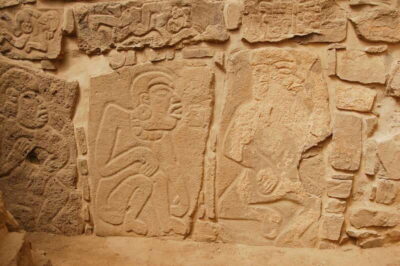
- Los Danzantes rock carvings and the I-shaped ball court from around 100 BC
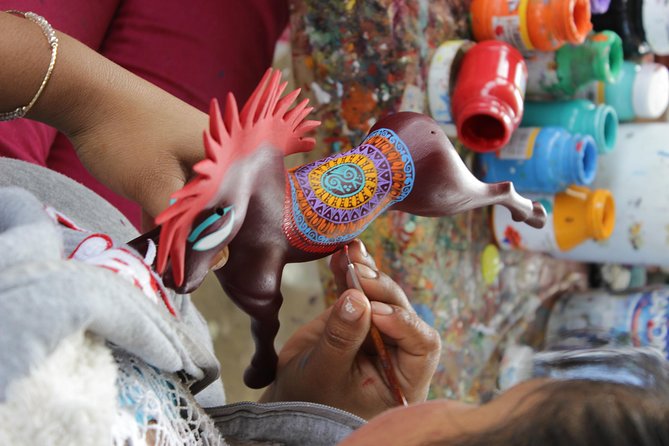
- Arrazola alebrijes made from copal wood, plus time to browse the shop
- Cuilapam de Guerrero Dominican convent and the capilla abierta (open chapel)
- San Bartolo Coyotepec black pottery plus MEAPO and a craft market
- Small group size (max 18) so the day stays organized, not chaotic
Monte Albán, alebrijes, and black pottery in one packed Oaxaca day
This is the classic Oaxaca day plan, but with enough moving parts to feel like you actually learned the region instead of just “checking boxes.” You start at a mountaintop UNESCO site, then you descend into small towns where art is made by hand, not mass-produced.
I like how the stops connect. The day starts with how the Zapotecs used ceremonial architecture, then you shift to colonial-era religious power at Cuilapam, and finish with craft traditions that survived by adapting and being passed down.
It’s also realistic. The itinerary is tight enough that you’ll see a lot, but it’s not a nonstop sprint. You get structured guide time plus some moments to look around on your own.
Getting to the mountaintop: timing, heat, and walking reality
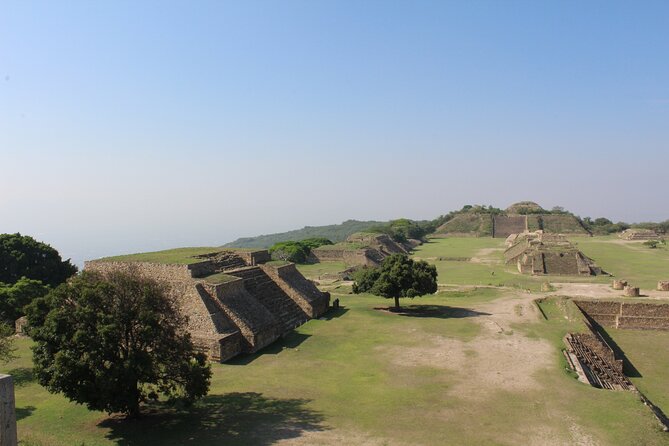
Pickup is midmorning, with a scheduled start around 8:30 am. That early departure matters because Monte Albán is hot, bright, and stair-heavy. Even if you’re in good shape, you’ll feel the climb because the site sits on a plateau and you move between levels.
The tour is designed for moderate physical fitness, which basically means comfortable walking plus a willingness to climb. Shoes you can trust are non-negotiable. Bring water, wear sunscreen, and consider a hat that covers your neck.
One practical tip: pace yourself on the South Platform climb. The steps can feel never-ending in direct sun. If you go slow and steady, you’ll reach the viewpoints without losing the joy.
More of Monte Alban and Mitla:
- Hierve el Agua, Tule Tree, Mitla and Mezcal Distillery Tour
★ 4.5 · 1,094 reviews - Explore Hierve el Agua, Mitla, Tule, Textile and Mezcal for a day
★ 5.0 · 1,043 reviews - Monte Alban Guided Half Day Tour
★ 5.0 · 880 reviews
Inside Monte Albán: plazas, tombs, Los Danzantes, and the ball court
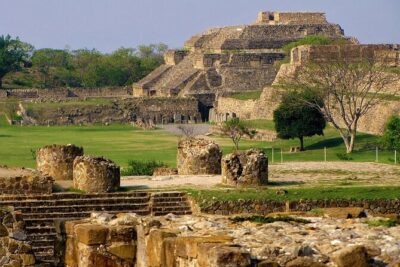
At about 2.5 hours on site, you get enough time for both guided highlights and personal looking. The guide typically takes you across the main ceremonial zones, and you’ll see the logic of how the Zapotec city was laid out.
Here’s what makes Monte Albán special on this tour:
- The Grand Plaza on the flattened plateau, where you can picture public ceremonial life
- The Los Danzantes (The Dancers) stone carvings, one of the best-known decorative sequences at the site
- Tomb areas where excavations revealed painted details and stone carvings, not just empty rooms
- Temples, pyramids, and altars arranged for ritual movement and visibility
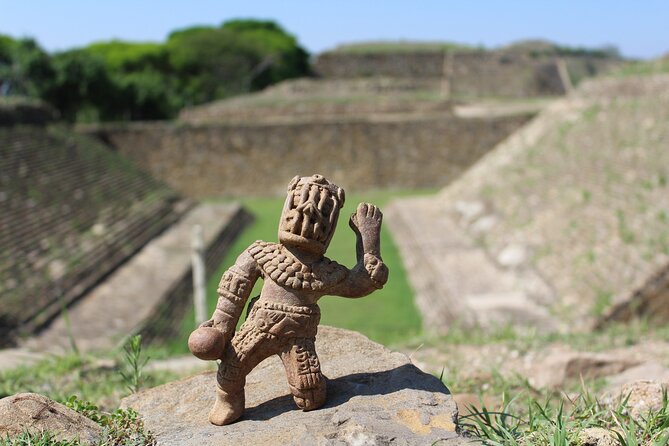
- The I-shaped ball court, dated to around 100 BC, a detail that makes the whole place feel shockingly old but still structured
You’ll also visit the South Platform (Plataforma Sur), known for a wide staircase and big views. This is the payoff moment. Once you’re up there, you understand why people built their city where the air is thinner and the horizon is open.
San Antonio Arrazola: alebrijes as a living folk art craft stop
After Monte Albán, you drop down to San Antonio Arrazola, a calmer town at the base of the ruins. The pace shifts immediately. Instead of stone and theory, you move into woodcarving craft.
You’ll spend around 45 minutes here. The highlight is the alebrijes tradition: fantastic creatures carved in copal wood, often with mythical monsters and imaginative zoology. It’s not just “pretty art.” It’s a window into how Oaxaca’s folk artists keep storytelling alive through form.
You’ll usually get enough time to walk the town, see the work up close, and browse the shop. Based on past guides like Emanuel or Daniel, the best moments come when the guide connects the craft to local creative culture, rather than treating it like a quick souvenir stop.
If you love art but hate pressure selling, you’ll likely feel okay here. The browsing time tends to be unhurried, and you’re not pushed into buying on the spot.
Cuilapam de Guerrero convent: Dominican colonial history and the open chapel
Next comes Cuilapam de Guerrero, where the focus turns colonial-era. You’ll visit the 16th-century Dominican convent, known for an unfinished basilica and its capilla abierta, the open chapel style.
This stop lasts about 1 hour. Even if you’re not a church-and-museum person, I think it’s worth it because it shows how religion was taught and practiced in indigenous communities. The open chapel concept matters, it was built to reach larger groups during conversion efforts.
A small practical note: some portions may cost extra. For example, the optional museum visit can carry an additional fee (often listed as $70 pesos per person for the museum option).
If you’re the type who likes questions, this is where you can ask your guide about how Spanish missionary strategies interacted with local life. Guides such as Silvia often explain the colonial layers in a way that keeps the stop from feeling like a lecture.
More days out of Oaxaca:
- AUTHENTIC OAXACA CULTURAL FOOD TOUR, eat like a local.
★ 5.0 · 462 reviews - Half day tour to Monte Albán
★ 4.5 · 420 reviews - Boil the water and distillery mezcal tour
★ 5.0 · 413 reviews - Immersion Tour and Oaxaca Markets, All gastronomy included
★ 5.0 · 386 reviews
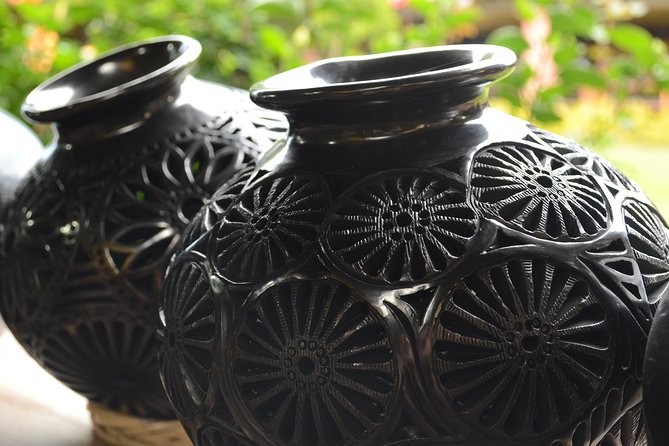
San Bartolo Coyotepec: black pottery, MEAPO, and a real craft market
The final artistic stop is San Bartolo Coyotepec, famous for black pottery (barro negro). You’ll spend around 45 minutes, which is enough time to see the process details and then get hands-on with the market atmosphere.
You visit the 16th-century San Bartolo Coyotepec Church, plus the Oaxaca State Museum of Popular Art (MEAPO) and a craft market where work from more than a dozen families is displayed. This is where the “how it’s made” story connects to what you can actually bring home.
What I like about this stop is that it’s not only about the color. You learn that the craft has roots stretching back to pre-Columbian ceramics, and the local technique is distinctive. If you care about craft traditions, you’ll probably enjoy the pottery demonstration style moments that many guides include.
Because Coyotepec is a craft hub, it’s also where you’ll feel tempted by purchases. Give yourself a budget and a limit, so you can buy the right piece instead of the first one that catches your eye.
Lunch timing and budgeting for entrances
Lunch is part of the day, but it’s not included in the base price. You’ll have a buffet meal near the convent area, typically paid directly on your own. The tour info lists it as $200 MX plus drinks, and some guides keep it as a proper break rather than a rushed stop.
This matters because Monte Albán can drain you. You climb and bake in the open air, then you keep moving. A buffet with Oaxacan favorites helps you reset. Mole often shows up as a highlight in this type of meal, and it tends to be better than you’d guess for a day trip.
Budgeting for entrances is also important. Tickets to Monte Albán and the Cuilapam site are not included. In recent outings, some guests reported paying around 175 pesos per person for Monte Albán and monastery entrances, and the Cuilapam museum option may cost extra as noted earlier. Exact amounts can vary, so plan for a bit of cash on top of the tour price.
Price and logistics: what your $37.55 really covers
At $37.55 per person, the value comes from what you’re not doing yourself. You’re paying for coordinated transport, a bilingual guide, and a guided route across four different stops that would be annoying to stitch together alone.
What you still need to cover:
- Site admissions for Monte Albán and Cuilapam (not included)
- Lunch (paid on site)
- Any optional museum/add-on fees (such as the museum option at Cuilapam)
The tour also includes travel insurance, uses an air-conditioned vehicle, and provides a mobile ticket. The group size is kept to 18 travelers, which helps the pacing and makes it easier for the guide to manage questions.
One more logistics note: sometimes departures and returns can run late due to coordinating multiple guests. If your dinner plans are tight, build in a cushion for traffic and end-of-day timing.
Who this tour suits, and who should consider a different plan
This works best for:
- First-time visitors who want Monte Albán plus Oaxaca craft towns in one day
- People who like guided context, especially Zapotec and colonial-era explanations
- Travelers who can handle heat, stairs, and walking on uneven surfaces
- Families and couples looking for a structured, not-too-technical cultural day
It may be less ideal if:
- You want a mostly flat, low-walking schedule
- You dislike craft-market stops and prefer only archaeology and architecture
- You’re very sensitive to language balance. The tour is offered in English, and guides often speak both English and Spanish, but some groups have experienced more Spanish than expected during details.
Should you book Monte Albán, Arrazola, Cuilapam, and Coyotepec?
If your dream Oaxaca day includes UNESCO ruins, plus hands-on culture you can see and buy (alebrijes and black pottery), then I think this is a strong booking. The guide-led storytelling is a key part of the value, and Monte Albán is the centerpiece where your time pays off.
Book it if you’re okay with a sun-and-steps day and you’re ready to pay separate entrance fees and lunch. Skip it if you want a lighter, slower day focused only on one site, because the itinerary is intentionally packed.
Either way, pack smart, bring water, and plan to enjoy the ride as much as the stops.
FAQ
What time does the tour start, and how long does it last?
The tour starts at 8:30 am and runs about 8 hours total.
Where does pickup happen in Oaxaca City?
Pickup is from Quinta Real 5 de Mayo 300, Ruta Independencia, Centro, 68000 Oaxaca de Juárez, Oax., Mexico, and the experience ends back at the meeting point, with hotel pickup and drop-off included.
Is the tour offered in English?
Yes. The tour is offered in English, and your guide provides English- and Spanish-speaking service.
What’s included in the tour price?
Included are a professional English- and Spanish-speaking guide, travel insurance, and an air-conditioned vehicle. You also receive a mobile ticket.
Are tickets to Monte Albán and Cuilapam included?
No. Tickets to Monte Albán and Cuilapam are not included. Any optional museum at Cuilapam may cost extra as well.
Is lunch included?
Lunch is not included in the base price. There is a buffet stop where lunch is paid separately, listed as $200 MX plus beverages.
Can I cancel for a full refund?
Yes. You can cancel for a full refund up to 24 hours before the experience starts.
New reviews in from Oaxaca City
- Cooking classes from the Isthmus with a Tehuana★ 5.0 · 51 reviews
- Oaxacan Journey★ 5.0 · 52 reviews
- Private Historic City Tour + Street Food of Oaxaca – Best Rated★ 5.0 · 53 reviews
- Street Art Tour With An Artist in Oaxaca★ 5.0 · 54 reviews
- Private and safe transfer from the airport to the hotel in Oaxaca★ 4.5 · 58 reviews
- Hierve el Agua Half Day trip in the morning★ 5.0 · 66 reviews
- Paint your Alebrije with the Jimenez family.★ 5.0 · 66 reviews
- Tour Boil the “classic” water★ 4.5 · 67 reviews
Monte Alban & Mitla Tours, compared.

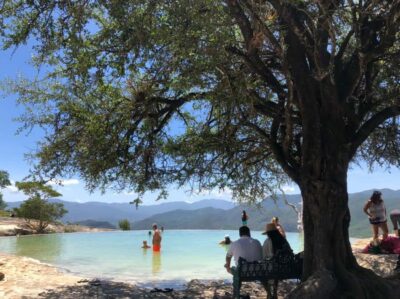
Hierve el Agua, Tule Tree, Mitla and Mezcal Distillery Tour
Read our review →
Explore Hierve el Agua, Mitla, Tule, Textile and Mezcal for a day
Read our review →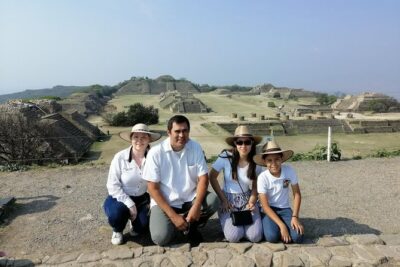
Hierve el Agua, Mitla, El Tule Tree, Rugs, Mezcal Distillery Tour
Read our review →
Browse the lists this tour appears in