
Reviewed · HISTORICAL TOURS
Queretaro: colonial architecture and history
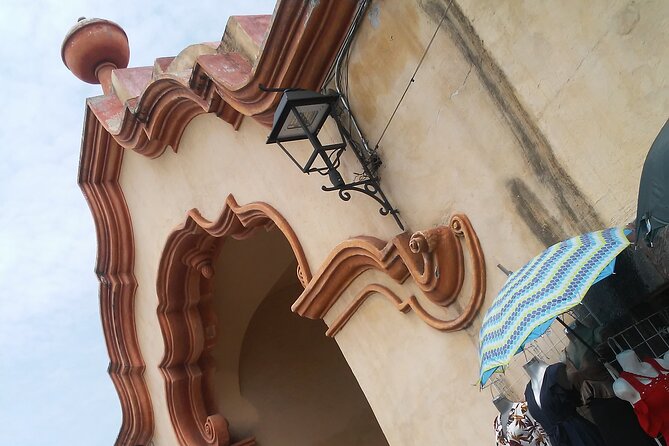
Queretaro’s colonial core is compact, scenic, and full of stories that explain why this city mattered in Mexico and beyond. I love how the tour feels like a story-driven walk, with each site setting up the next. I also like the small-group size (up to 6), which makes it easier to ask questions and actually hear the details.
One possible drawback: this route leans more toward religious history and local legends than a strict architecture lecture. If you want lots of technical building analysis, you may need to ask directly for that angle.
Key things I’d bet you’ll enjoy
- El Acueducto De Queretaro, including the city-building origin story and the human legend tied to it
- Panteon de los Queretanos Ilustres, where important local figures connect to national history
- Santa Cruz de los Milagros up on the hill, mixing legends with major chapters of national story
- Plaza de Armas plus Neo-Classical highlights, then back to street-level life in the historic center
- Convent stops in sequence (San Francisco de Asís, Santa Clara), which makes the whole religious and civic footprint make sense
Queretaro in 3 to 4 hours: why this route works
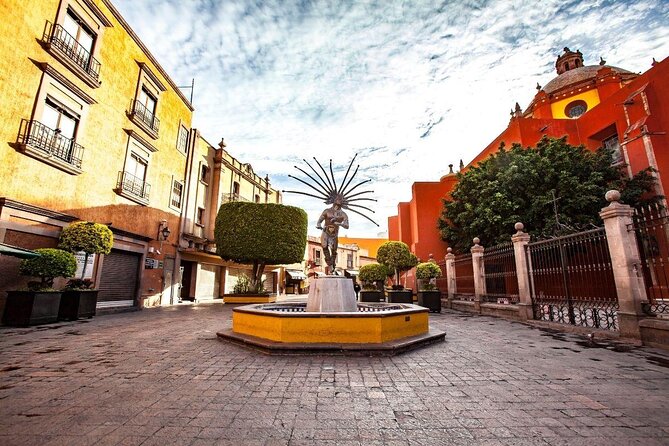
This is a walking tour designed for orientation. You start in a viewpoint area and end in the historic center at the city museum area, so you end your morning with options. That matters, because Queretaro is best enjoyed in layers, not all at once from a single bus window.
The pace is built around short stops, mostly 15 to 40 minutes each, with enough time to listen and look without feeling rushed. The group is capped at 6, so it does not turn into a loud stampede. You’ll still be moving for a few hours, so wear comfy shoes and plan for some walking on uneven surfaces.
The big value is the “why” behind what you’re seeing. Churches, convents, plazas, and the aqueduct are not just pretty backdrops here. They show how power, faith, and civic planning shaped the city.
Price and what your $50 includes (and what it does not)
At $50 per person for about 3 to 4 hours, this is priced like a solid local-guided history tour, not a budget stroll. Here’s why it feels fair: the stops include free admission tickets at each location, and you’re paying for a guide to connect the dots.
So what you are really buying is interpretation. A good guide turns a façade into a timeline, and a timeline into a sense of place. You also get the convenience of a mobile ticket and an English-speaking guide, which keeps your time from getting eaten by admin.
What you should not expect is a museum-style, sit-down experience with every wall explained like a textbook. This is street-level history with listening time built in, and that works best if you enjoy stories while you walk.
More Historical Tours in San Miguel de Allende:
- Historical and Cultural Walking Tour of San Miguel de Allende
★ 5.0 · 641 reviews - Historical & Cultural Walking Tour of San Miguel de Allende
★ 4.8 · 225 reviews - Historic Downtown Walking Tour
★ 5.0 · 1,289 reviews
Your guide and the tour style: Armando’s storytelling focus
Armando is the name you’ll see again and again in standout feedback, and it shows in the overall style. He connects local events to larger Mexican, and even world, contexts, so Queretaro stops feeling like an isolated dot on the map.
You also get a teaching format that moves in steps. You learn something at one site, then you carry that idea forward to the next one. That’s why the route feels coherent, especially when you hit the convents in the latter part of the walk.
Keep in mind one pacing truth: with popular historic sites and festival crowds sometimes around, there can be more on-the-ground noise. The structure still holds, but if you are the type who needs quiet for note-taking, bring patience.
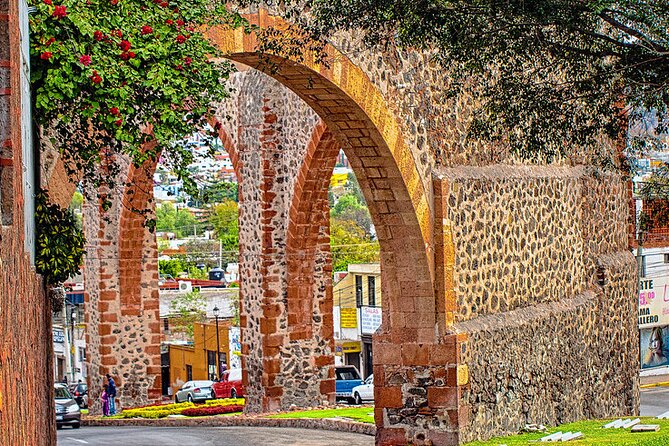
Stop 1: El Acueducto De Queretaro, where the city starts telling its story
Your first stop is El Acueducto De Queretaro, and it sets the tone fast. Aqueducts are practical infrastructure, but they also show ambition. You’re not just looking at old stone, you’re being walked through how the city’s foundation story connects to water, growth, and planning.
You’ll also hear a legend tied to the aqueduct’s construction, including a love story angle. That mix of real civic purpose plus human legend is a big reason this opening stop works. It gives you a memory hook before you move into churches and convents.
Practical tip: stand where you can see the structure clearly, then listen before you take photos. It’s easy to crowd around camera positions and miss a key part of the explanation.
Stop 2: Panteon de los Queretanos Ilustres, history you can’t ignore
Next comes Panteon de los Queretanos Ilustres. Cemeteries can feel heavy, but they’re also one of the best ways to understand who shaped a place. Here, you’ll hear about important local figures buried there, plus actions linked to national history.
This stop changes the tour rhythm in a good way. You go from stone engineering and legends to named people and their impact. It helps you see Queretaro as a civic engine, not just a set of colonial buildings.
A possible consideration: if you prefer lighter topics, this will feel more serious than the plaza scenes. On the flip side, it’s also one of the stops that makes the rest feel earned. You understand who mattered, which makes the political and religious stories later on land better.
More days out of San Miguel de Allende:
- Immersive Cañada de La Virgen Pyramid Tour
★ 5.0 · 789 reviews - Original Downtown Food Tour with Taste of San Miguel
★ 5.0 · 598 reviews - Tacos and Tequila Walking Tour with Taste of Miguel
★ 5.0 · 583 reviews - Half-Day Horseback Riding Adventure
★ 5.0 · 417 reviews
Stop 3: Templo y ex-convento de la Santa Cruz de los Milagros on the hilltop
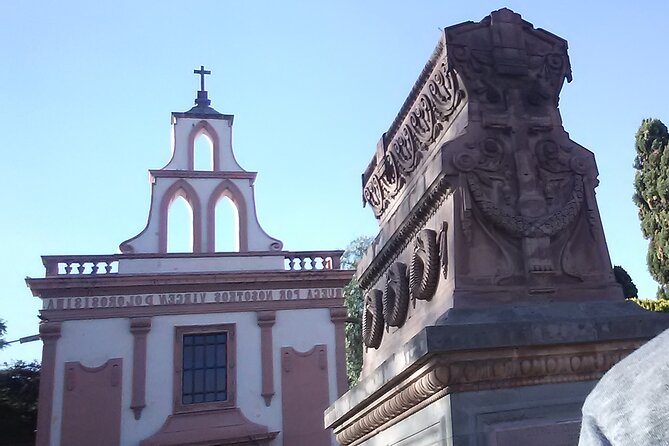
You then climb to Templo y ex-convento de la Santa Cruz de los Milagros, on the kind of hilltop vantage that tells you the city was built to defend sightlines. This stop is where legends and national chapters start blending more directly.
You’ll learn about the idea of Queretaro being founded again, a key background thread that helps explain why layers of history overlap in the old center. The convent’s Franciscan involvement is part of the story, including how these religious institutions were woven into major national moments.
If you like your history with a sense of place, this one delivers. Hilltop sites make listening easier because you can picture how people moved and why they gathered here.
Practical tip: bring a layer if you run cool or hot. Hilltop areas can feel windy, and you’ll be standing while the guide talks.
Stop 4: Plaza de Armas, Neo-Classical edges and everyday historic life
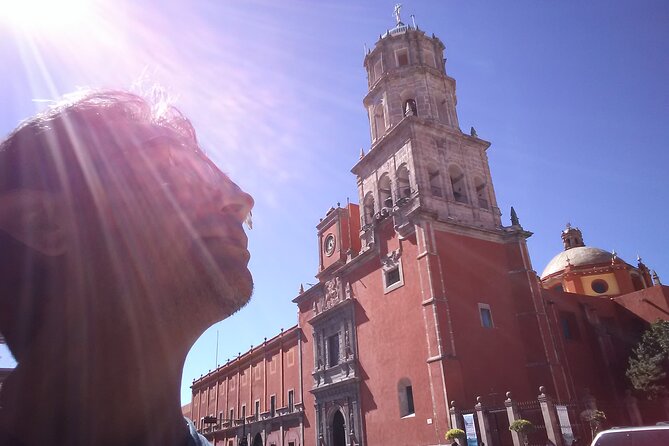
After the hill, you head to Plaza de Armas, the heart-space where historic cities tell you what life looks like. You’ll also stop near or discuss Neo-Classical examples before settling into the main square’s bigger history.
This is the “reset” moment in the tour. You go from heavy stories to the visual layout of the city: where movement funnels, where people meet, and how power tends to sit near the center.
Why it matters: once you understand the square layout, it becomes easier to read the city on your own after the tour. You’ll know what parts are central because of civic design, not just because they look pretty.
Stop 5: Santuario de La Congregacion de Nuestra Senora de Guadalupe and the builder’s story
Next is Santuario de La Congregacion de Nuestra Senora de Guadalupe. Here the focus turns squarely to the Virgin of Guadalupe and why she matters historically in Mexico. You’ll also hear about the temple’s builder, which adds a practical, human layer to what could otherwise stay purely devotional.
This stop connects faith to public identity. You’re not just learning a religious figure’s role, you’re learning how that role got built into architecture and community memory.
One practical note: religious spaces can have rules about where you stand or how you move. Follow the guide’s cues, and you’ll get the most out of the visit without slowing things down.
Stop 6: Templo y Exconvento de San Francisco de Asis de Queretaro, the convent and a historic route
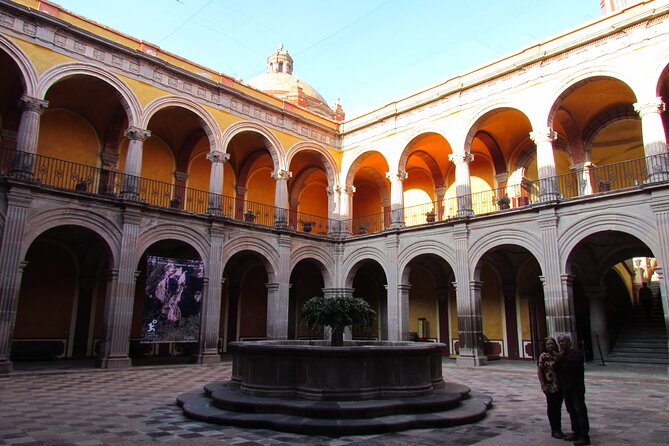
Then you reach Templo y Exconvento de San Francisco de Asis de Queretaro. This is a strong stop for understanding how buildings change over time. You’ll appreciate transformations tied to major historical moments in the country, not just changes in paint or style.
A standout detail here is the mention of the spot where an ancient inner-land road started. That idea ties religion, travel routes, and settlement patterns together. In other words, you start seeing the convents not only as spiritual centers, but also as part of the city’s movement system.
If you’re hoping for architecture commentary, this is one place where you can ask questions because convent spaces often show multiple eras in one footprint. One review feedback point from a past guest noted that the tour is not purely architecture-focused, so if that’s your priority, flag it early to Armando.
Stop 7: Convento de Santa Clara, a single corner with hospital, fountain, and private baroque form
You finish at Convento de Santa Clara, and this stop is visually satisfying because several types of history sit side by side. You’ll hear how it relates to the first and largest female convent in the city, plus how the ancient city hospital fits into the same complex story.
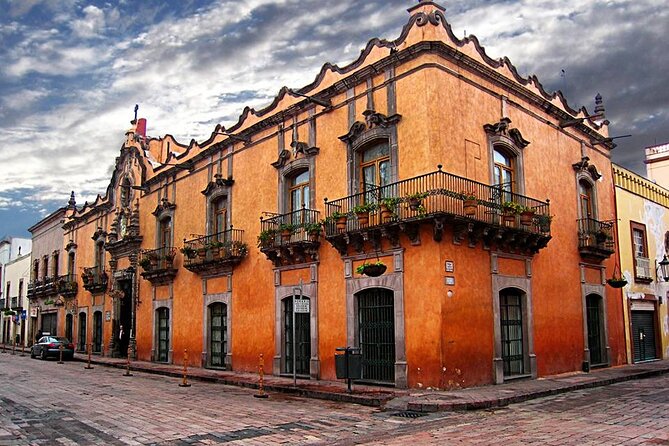
You’ll also encounter a Neo-Classical fountain here, and learn about the baroque private house architecture example in the area. That combination is a real payoff: it shows how the city’s institutions served multiple roles over time.
This final stop is a good moment to step back and look at the city as a whole. At this point, the earlier aqueduct, cemetery, plaza, and religious sites should click together as one story. You’ll be able to recognize patterns when you walk away on your own.
Where the tour starts and ends, plus what to do after
The meeting point is at Mirador de los Arcos, Ejército Republicano 47, in the La Santa Cruz, La Pastora area of Santiago de Querétaro. The tour starts at 9:00 am.
The walk ends at Museo de la Ciudad, Calle Vicente Guerrero Nte. 27, Centro, in the historic old-town area, where the former Capuchin’s Convent is located. That ending spot is useful because you can keep going on foot, grab a taxi back to your hotel, or find a place to rest and eat.
If you plan dinner the same day, I’d treat this as your morning anchor. You now have a mental map of the center, and you can pick your next walk with way more confidence.
Who should book this tour, and who might want a different style
Book it if you love history with a narrative thread, especially when the guide connects Queretaro’s role to wider Mexican events. The standout feedback around Armando’s storytelling and the way he links big events to local sites is exactly what this route is built for.
It also fits well if you want a quick, high-value overview. You’ll cover multiple major site types in one morning, and you’ll leave knowing what the city’s colonial footprint is really saying.
Consider a different tour if your main goal is deep architecture analysis. This one is very much about religious history, legends, and the city’s historical role. You will still see strong architecture, but the emphasis is on story and context first.
Should you book the Queretaro colonial architecture and history tour?
Yes, if you want to get your bearings fast and understand why these buildings matter, this is a smart use of half a day. For $50, you’re paying for an English-speaking guide who can connect aqueduct, convent, plaza, and people into one clear picture, not just a sequence of photos.
I’d especially recommend it if you’re visiting for a short time and don’t want to spend your first day trying to self-interpret everything. Start here, then use the rest of your day to wander with confidence.
If you’re the type who wants heavy architecture jargon, bring your questions. Ask early for specifics on styles and building features. You’ll still get the full route, but you’ll get more of what you care about by steering the conversation.
FAQ
How long is the Queretaro tour?
It runs about 3 to 4 hours.
What time does the tour start?
The start time is 9:00 am.
Is the tour offered in English?
Yes, it is offered in English.
How many people are in a group?
The tour has a maximum of 6 travelers.
Is there an entry fee for the stops?
Each stop lists admission ticket free, and the tour includes mobile ticketing.
Is the walking moderate?
The tour requires moderate physical fitness level, so plan for a few hours of walking and standing. Service animals are allowed.
New reviews in from San Miguel de Allende
- State-of-the-art Mexican cooking classes★ 5.0 · 52 reviews
- Private Guanajuato City Tour From San Miguel★ 5.0 · 58 reviews
- Music Tour & Lunch★ 5.0 · 60 reviews
- Private Tour in Guanajuato Capital Leaving San Miguel Allende★ 4.5 · 63 reviews
- Combination Trail Riding and Hot Springs in San Miguel de Allende★ 5.0 · 68 reviews
- Guanajuato City Shared Tour from San Miguel de Allende★ 5.0 · 73 reviews
- Recorrido Histórico a Pie: Descubre y Explora San Miguel (ES/EN)★ 4.5 · 86 reviews
- Vineyard, tour, tasting and fun in San Miguel de Allende★ 4.5 · 87 reviews
Historical Tours, compared.


Mexico City Historical Centre Food Tour with 7 Authentic Tastings
Read our review →
Historical and Cultural Walking Tour of San Miguel de Allende
Read our review →
Historical and Cultural Walking Tour of San José del Cabo
Read our review →
Walking Tour in Mexico City for Exploring their Cultural Heritage
Read our review →Browse the lists this tour appears in