
Reviewed · WALKING TOURS
Walking Tour: Temples and Convents (Western Zone)
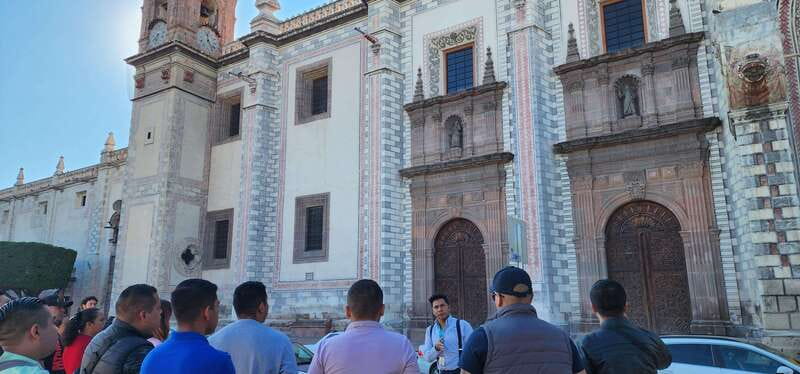
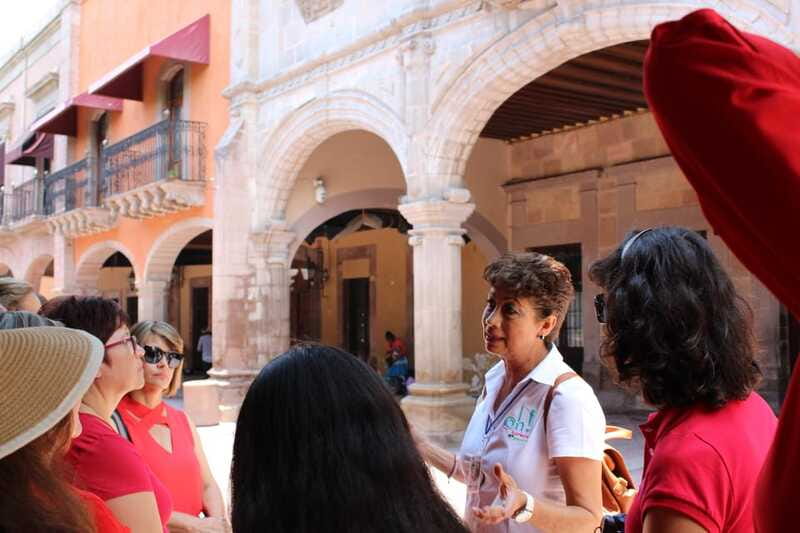
Querétaro has a way of surprising you, even if you think you already know what Mexican colonial architecture looks like. This Western Zone walking tour zeroes in on the city’s temples and convents, then ties the buildings to the spiritual and cultural story that shaped downtown.
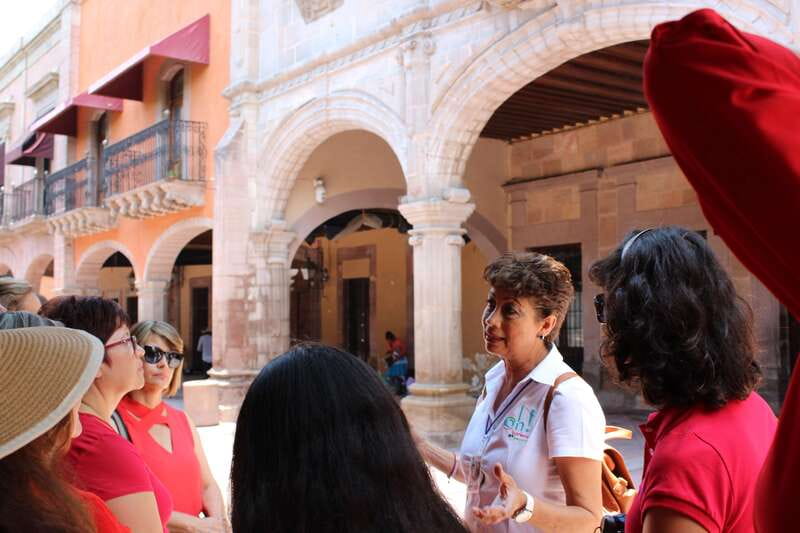
I especially like how the focus stays practical and visual: you are out on the streets looking at Baroque architecture up close, while your guide explains what you are really seeing. I also like the pacing, because guides such as Carlos, Jesús, Jorge, and Julio are repeatedly praised for answering questions clearly, in English or Spanish, without turning the walk into a lecture.
The one downside to keep in mind is that the tour is only 2 hours, so you may wish it lasted longer if you really love churches and details. Also, one person noted audio was harder on their day, so bring a headset habit in your own brain, meaning face the guide and position yourself where you can hear.
Key highlights worth your time
- Western Zone focus on iconic convents and temples, not the city’s founding story
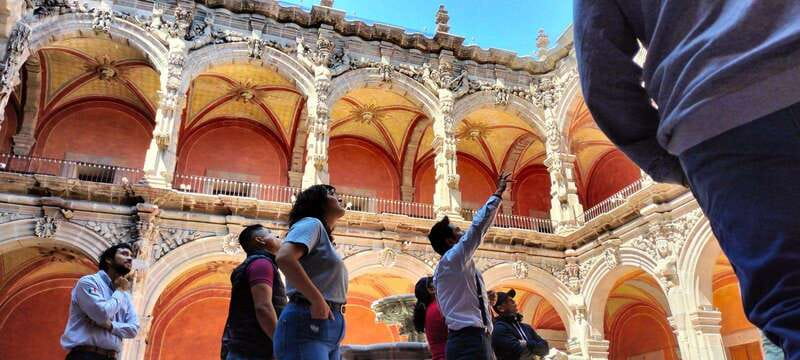
- Baroque architecture you can admire while your guide explains the style and its role
- Convent history with context, including the Ex Convent of San Francisco
- High praise for guides like Jesús, Jorge, Julio, and Carlos for clear answers and great English
- Two hours that move fast, great for first time planning, but not ideal if you want to linger
Western Zone Temples and Convents in Querétaro, what this tour is really about
This is the kind of tour that helps you stop wandering randomly and start noticing patterns. In the Western Zone, the story of Querétaro is told through religious spaces, not just civic monuments. You walk, you look, and you learn how convent complexes and temples influenced daily life and the way the city grew.
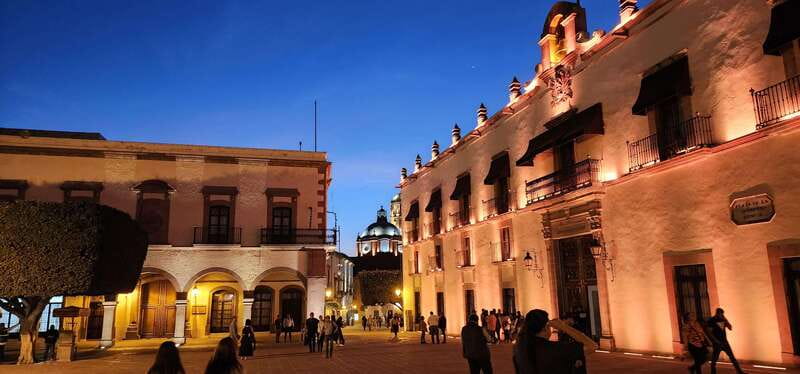
Querétaro is a UNESCO World Heritage Site, and the guides generally connect the dots so you can see this is not a pile of pretty facades. The religious orders, the architectural choices, and the artistic details all reflect how Spanish colonial culture evolved locally. If you care about history, art, or simply want to understand why the Centro looks the way it does, this format works.
And yes, it is fun. The best part is that you are not stuck at one stop. The tour is designed to keep you moving between major monuments and religious landmarks, so the city feels like a living timeline rather than a checklist.
More Walking Tours in Santiago De Queretaro:
- Historic Downtown Walking Tour
★ 5.0 · 1,289 reviews - Playa del Carmen Walking Food Tour
★ 5.0 · 1,274 reviews - Mexico City: Historic Downtown Walking Tour
★ 4.8 · 1,039 reviews
Where the Western Zone walk takes you, the main religious landmarks
The Western Zone route centers on several of Querétaro’s most recognizable convents and temples. While I cannot guarantee exact viewing points, the stops described for this tour give you a strong sense of what you are signing up for.
Here are the key places the route is built around:
- Ex Convent of San Francisco, noted as the first religious order to arrive in Querétaro
- Temple of Santa Rosa de Viterbo, praised for its Baroque grandeur
- Capuchinas, another standout religious complex in the Western Zone
- San Agustín, a major convent space tied to the city’s colonial religious influence
- Santa Clara, included as part of the chain of landmarks that shaped the area
That list matters because it is not random. These stops trace the way convent and temple life became a backbone for culture and education during the colonial period. Even if you are not a church person, you will still come away with a map in your head for what to seek out on your own.
Stop by stop: what to look for at San Francisco, Santa Rosa, Capuchinas, San Agustín, and Santa Clara
This tour is about admiration with explanations. So instead of waiting until the end to understand the buildings, you get meaning attached to what you are seeing in real time.
Ex Convent of San Francisco, start with the first religious order
San Francisco is where the story begins, because this was the first religious order to arrive in Querétaro. That makes the stop more than a pretty building. It is a starting point for understanding why later convents and temples followed a pattern, and how the religious presence became organized and influential.
As you look around, focus on the overall convent complex idea, not only on one facade. Your guide’s job is to connect the location to the broader timeline, so ask questions if you want more clarity on why that early arrival mattered.
Something else to do with a Santiago De Queretaro day:
- Querétaro: City Tour in a Classic Ford T Vehicle
★ 4.7 · 229 reviews
Temple of Santa Rosa de Viterbo, Baroque detail that has a point
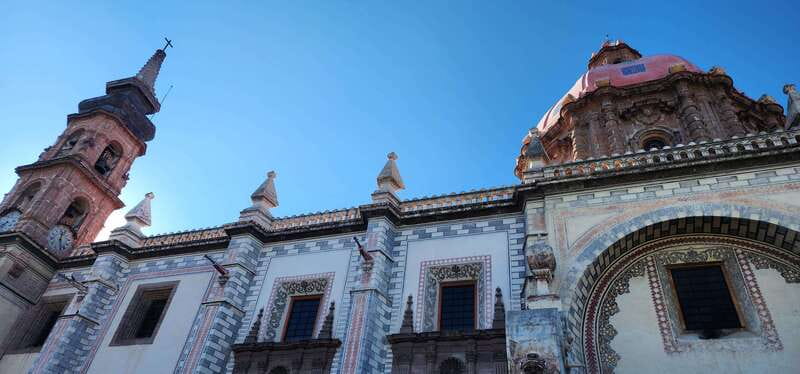
The Temple of Santa Rosa de Viterbo is the Baroque highlight. Baroque architecture is easy to appreciate visually, but it also has a message. It uses drama, ornamentation, and strong visual impact to communicate power and spiritual importance.
On this stop, listen for the way your guide explains what Baroque style was doing in that moment. Then look again at the facade and proportions with that in mind. It is the fastest way to turn a photo stop into real learning without needing a museum ticket.
Capuchinas, a convent landmark in the spiritual city map
Capuchinas rounds out the religious landscape. Even with no extra time for a big sit down, the guide helps you understand why this complex belongs in a Western Zone walking route.
If you tend to glaze over when tours start talking about orders, do not worry. Ask what makes Capuchinas different from the others. The guides who earn top marks, like Jesús and Jorge, are praised for being patient and personal with answers, not just reciting facts.
San Agustín, where you connect the dots across orders
San Agustín is where you start comparing. Once you have seen San Francisco and Santa Rosa, your brain starts looking for themes. San Agustín helps you see the continuity and variation across colonial religious influence.
Keep your eyes open for architectural cues that signal different phases or intentions. Even if you do not catch every detail, you will leave with a clearer mental framework for how the Western Zone formed.
Santa Clara, finishing with the kind of place that shaped the neighborhood
Santa Clara helps close the loop. This is the kind of monument that gives you a better feel for the city scale. Convents and temples were not isolated. They helped define streets, routines, and community life in the surrounding Centro area.
Here, I like to take a slower minute, look at the big picture, then recheck what your guide said about influence during the colonial period. That last mental review is what makes the 2 hours stick.
The guide quality is the difference, and names you’ll hear often
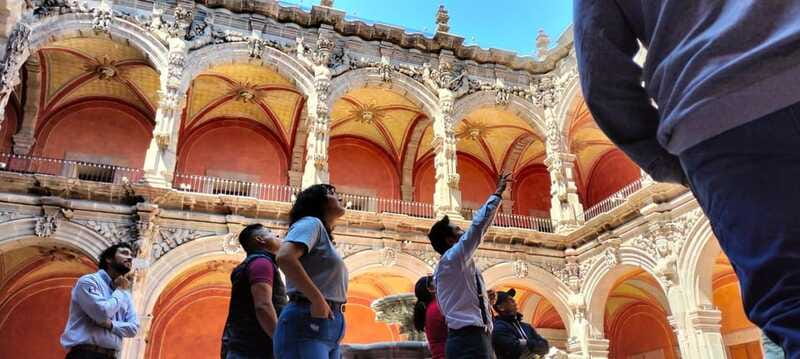
For a tour like this, guide skill is everything. And the pattern in the tour experiences you can expect is consistent: guides are praised for being extremely knowledgeable, personable, and focused on answering questions.
You will see names like:
- Carlos, often described as story driven and open to questions
- Jesús, repeatedly credited with deep historical context and strong English
- Jorge, highlighted for exceptionally well informed explanations
- Julio, praised for great information and an engaging style
One thing I really value is adaptability. Several people noted that guides will adjust the emphasis if you have interests in history, architecture, or art. In a 2 hour format, that matters. You do not want to feel stuck watching the same route regardless of your curiosity.
Also pay attention to how guides handle group dynamics. People report the guides keep things moving while still giving space to ask questions, and that they can explain events in a way that makes the city feel less confusing.
Two hours, one price: $23 and what it actually buys you
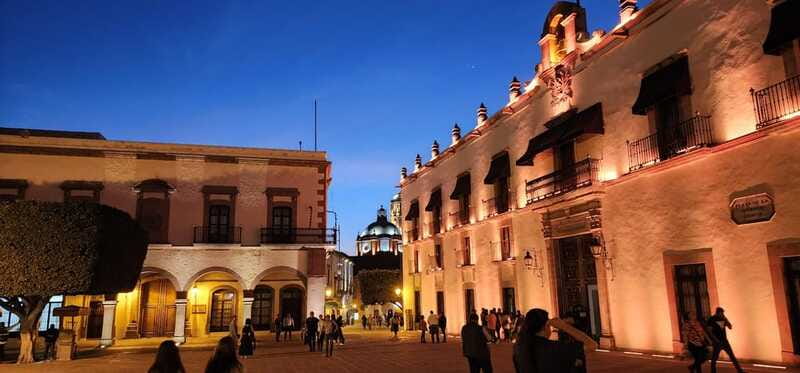
At $23 per person for a 2 hour walking tour, the value is mostly in three places: expert orientation, time saved, and better understanding of what you are seeing.
First, orientation. If you are new to Querétaro, the Western Zone can look like a cluster of impressive religious buildings. A good guide turns that into a story you can remember. Second, time saved. Instead of hunting down context yourself, you get history and architectural explanation while you are already there. Third, the guide interaction is part of the “product.” People consistently highlight how willingly their guide answered questions.
Is it a deal? For many visitors, yes, especially if this is one of your first activities in town. One practical suggestion that shows up in the experiences is doing this tour early, so the rest of your day wandering has a backbone.
The only budget caution is obvious but worth saying: there is no food or drinks included. So if you are the type who needs a snack break to keep your energy up, plan ahead.
Who this tour fits best, and who might prefer something else
This walking tour works best if you enjoy:
- Architecture and design explained in plain language
- Religious history tied to the city, not abstract dates
- Guided city orientation that helps you explore the Centro afterward
It is also ideal if you like a structured route. The stops are specific, and your guide provides the thread between them. If you love asking questions, you are in good shape, because guides are repeatedly described as patient and interactive.
Who might think twice? If you want a long, slow church crawl with lots of interior viewing time, a 2 hour walk may feel too short. One person even suggested the tour should be 3 hours or longer. Keep that in mind if your travel style is “linger and photograph everything.”
Comfort, pacing, and how to get the most out of the Western Zone
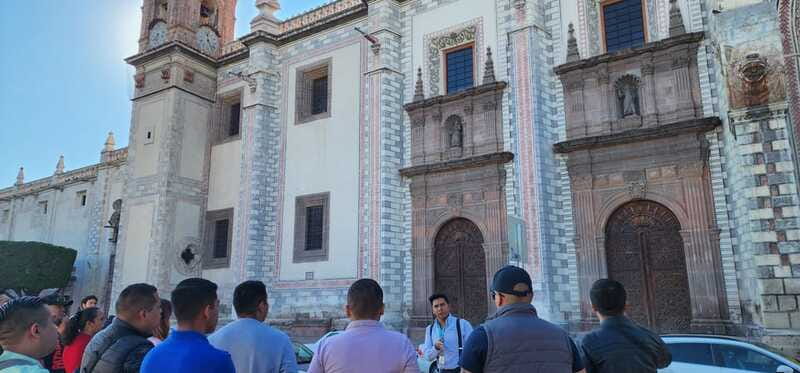
Because the tour is 2 hours, you should think of it as a concentrated “get your bearings fast” experience. Wear comfortable walking shoes. Keep your water plan simple. And if you are sensitive to heat or sun, you will likely be happier starting early or choosing a time when the light and weather suit you.
Sound matters on a walking tour. If you are hard of hearing, try to position yourself where you can clearly see and hear the guide. One experience noted that hearing was a problem on a specific day when the guide was using a mask and was sick. You cannot control that, but you can control where you stand.
Finally, bring curiosity. This is the kind of tour where the best moments often come from your follow up questions.
Should you book Walking Tour: Temples and Convents (Western Zone) in Querétaro?
If you want a high quality orientation to Querétaro’s colonial soul, I think this is a strong booking. The biggest reason is the combination of iconic religious monuments and consistently praised guide performance, including excellent English from guides like Jesús, Jorge, Carlos, and Julio.
Book it if:
- This is one of your first times in Querétaro
- You want a focused route in the Western Zone
- You like learning the story behind architecture
Skip it if:
- You are looking for a very long experience with lots of free time to linger
- You prefer to explore without structured explanations
Overall, for the price and the short time commitment, it is a smart way to understand why the Centro looks the way it does.
FAQ
How long is the Western Zone temples and convents walking tour?
The tour lasts 2 hours.
Where does the tour take place?
It takes place in Querétaro (State), Mexico, focusing on Querétaro’s Western Zone.
How much does it cost?
The price is $23 per person.
Is a tour guide included?
Yes. A live tour guide is included.
What languages are available?
The live guide is available in Spanish and English.
What is the tour mainly focused on?
The Western Zone route focuses on temples and convents, including admiration of Baroque architecture and learning the history connected to the convents and main monuments.
Is food or drinks included?
No. Food and drinks are not included.
Can I cancel for a refund?
Yes. You can cancel up to 24 hours in advance for a full refund.
Can I reserve and pay later?
Yes. The option to reserve now & pay later is available.
Is the tour wheelchair accessible?
Yes. The tour is wheelchair accessible.
New reviews in from Santiago De Queretaro
- Querétaro: City Tour in a Classic Ford T Vehicle★ 4.7 · 229 reviews
- Querétaro: Leyendas Santiago de Querétaro. El Tour★ 4.7 · 46 reviews
- Santiago de Querétaro: Pueblos Mágicos Cheese and Wine Route★ 4.8 · 96 reviews
- Querétaro: Tranvia Classic Trolley Car Guided Tour★ 4.6 · 47 reviews
Walking Tours, compared.

Frida Kahlo VIP [Museum Tickets Included] Walk, Markets & Churros
Read our review →

Puerto Vallarta’s Best Canopy Zipline + Jorullo Bridge walk!
Read our review →
Historical and Cultural Walking Tour of San Miguel de Allende
Read our review →
Tacos and Tequila Walking Tour with Taste of Miguel
Read our review →Browse the lists this tour appears in