Reviewed · MEXICO CITY TOURS
Arrivals & Survival of Jews in Mexico from 1519
Few walks in Mexico City connect Jewish life to the actual street corners and church facades you are standing in. I love how the route ties together Sephardic and Ashkenazi landmarks into one moving timeline, and I like that it treats history like something people lived, not just dates on a page. One thing to consider: a lot of the story is about the wider Mexican and Spanish religious power system, so this is not only a synagogue tour.
You will also notice the human side fast. The tour is led by a live guide, and Carlos gets name-dropped for being engaging, articulate, and willing to answer questions, not just recite facts.
The walk runs about 3.5 hours at a moderate pace and ends near Loreto Park, so it fits well as a planned morning block or a mid-day cultural reset, as long as you do not stack it too tightly afterward.
Key highlights worth planning around
- Small-group feel with a maximum of 10 travelers, which usually means more back-and-forth and fewer rushed moments
- Sephardic Mount Sinai and Ashkenazi Nidjei Israel are pointed out near the end, so you finish with clear, place-based payoff
- Inquisition-era sites are not abstract, you walk past buildings tied to punishment and forced control
- Diego Rivera and Frida Kahlo links get attention, including their backgrounds and how Mexico’s political history intersected with anti-Semitism
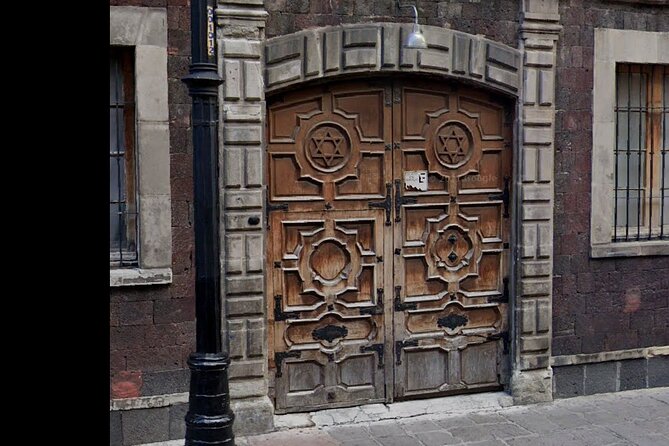
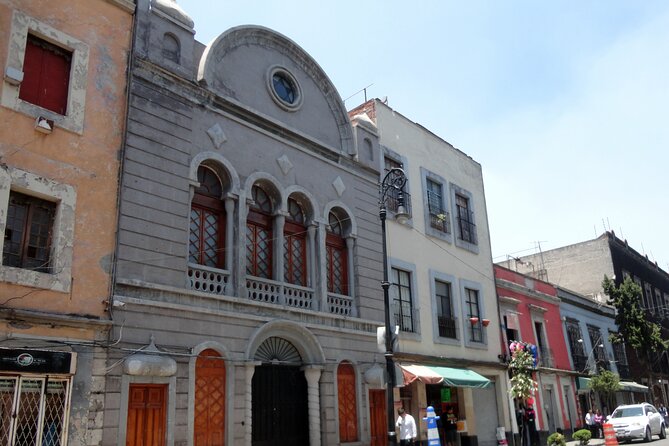
- Decommissioned Justo Sierra Synagogue gives you a look at older Ashkenazi worship space still standing in the Centro Histórico
- Free entry at multiple stops keeps more of your ticket focused on the guide and the story rather than admissions
Why This Mexico City Jewish History Walk Feels Different
This is the kind of tour where your brain keeps making connections long after the last stop. You start with views over Mexico’s layers of time, then you move into places shaped by Spanish religious control, and finally you land at synagogue sites that show how Jewish communities adapted and survived.
What makes it work is the balance. You get Jewish history, yes, but you also learn how Mexico City became a crossroads where religion, trade, politics, and migration collided. If you like your history practical and human, this fits. If you want only a tightly focused, synagogue-only narrative with zero wider context, you may feel the scope is broader than you expected.
More days out of Mexico City:
- Teotihuacan, Guadalupe Shrine & Tlatelolco Day Tour with Lunch
★ 5.0 · 11,603 reviews - Xochimilco, Coyoacan and Frida Kahlo with Optional Lunch
★ 4.5 · 7,320 reviews - Balloon flight + Breakfast in cave + Pyramids + Pick up CDMX.
★ 5.0 · 6,335 reviews
Librería Porrúa Terrace, Great Temple Views, and the Tour’s Tone
The experience starts at Librería Porrúa in the Centro Histórico. The guide begins with an intro chat from a terrace that overlooks the ruins associated with the Great Aztec Temple. That opening matters because it frames the theme of coexistence in physical space, before you ever reach the heavier chapters.
You are not just shown a timeline. You are given a lens. The guide sets up modern Mexico City as a place where different religions share the same city, even when earlier centuries forced people into hiding or punished them for beliefs outside the approved system.
This first stop is also where you get your bearings. The pacing is relaxed, and it helps set expectations for the rest of the route, including the shift from broad religious context to specific Jewish sites.
Cathedral Area and the Chapel of the Souls: How Architecture Was Used to Control
Next you head to the Catedral Metropolitana de la Ciudad de México, where the tour focuses on what sits behind the cathedral. The key moment is the Chapel of the Souls, viewed from a vantage point that lets you appreciate colonial architecture designed with a purpose tied to religious enforcement.
You hear about teachings displayed against heresy, meaning other religions, and you see how that idea translated into walls, placement, and visual power. The tour makes a point that Spanish Inquisition thinking shaped the built environment, including design choices intended to keep Jews away.
This stop is short, but it lands. You are not waiting around. You are looking, then connecting what you see to what was being attempted centuries ago: social control through religious messaging.
Practical note: this is mostly an outdoor-or-outside-feeling stop, so dress for city weather and keep your eyes up. Details matter here.
Plaza de Santo Domingo and the Trading Streets of Jews in Hiding
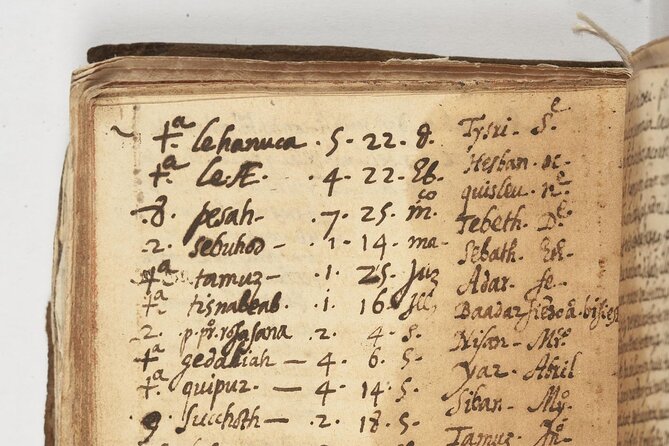
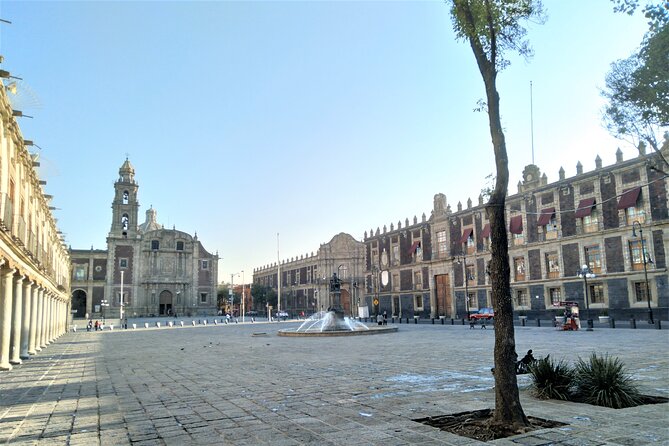
From there you move to Plaza de Santo Domingo, the trading marketplace tied to centuries of commerce. The tour places Jewish presence in this area during the 16th to 19th centuries, emphasizing that Jews in hiding still had to participate in trade, and that their movement was watched.
One of the most interesting parts is the focus on hidden and indirect messaging. You are guided to decipher anti-Semitic signals tied to the Inquisition’s influence, including messages you can find on the Santo Domingo church.
Then the tour brings in El Camino Real as a historical safe haven route for Jewish traveling traders. That helps you understand why survival was not only about staying put. Some people survived by moving carefully through trade networks that allowed them to keep going even when local pressure increased.
The value of this stop is that it answers a question people often forget to ask: what did daily life look like when belief could be punished? Here, it is commerce, risk, and careful navigation.
Something else to do with a Mexico City day:
- Teotihuacan pyramids morning or afternoon without tourist traps
★ 5.0 · 6,186 reviews - Teotihuacan Early Access Guided Tour with optional Lunch
★ 4.5 · 6,138 reviews - Balloon flight + pick up in CDMX + Breakfast in Cave + Pyramids
★ 5.0 · 5,651 reviews - Balloon Flight + Cave Breakfast + Pick Up from CDMX or We Fly
★ 5.0 · 4,410 reviews
Passing the Antiguo Palacio de la Santa Inquisición and the Perpetual Prison
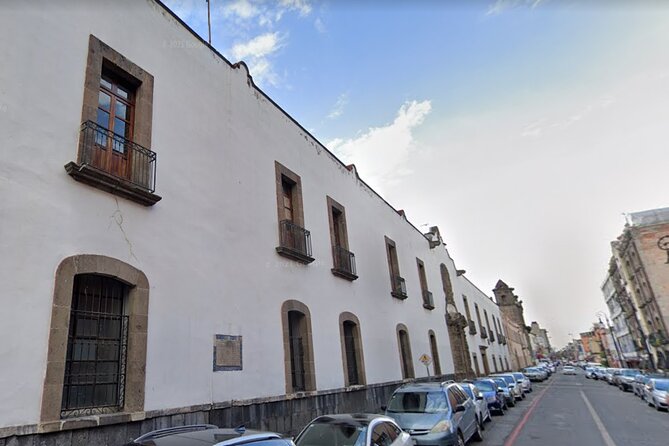
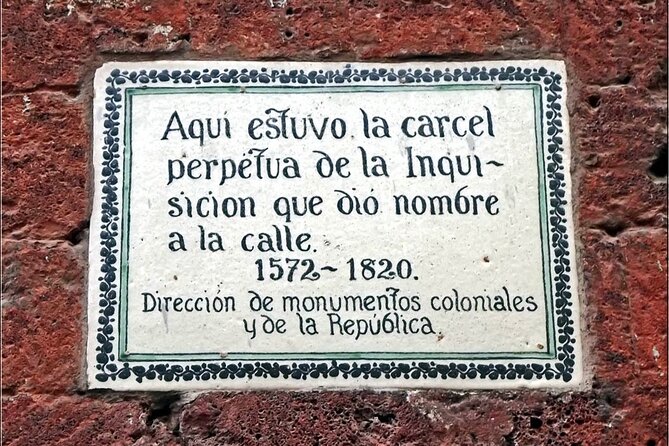
This is where the tone turns more serious. You pass by the Antiguo Palacio de la Santa Inquisición, including the administration building and living quarters right next to the Perpetual Prison.
The story is direct about what happened there: people were tortured and sentenced to death, including Jews caught in the machinery of the Spanish Inquisition’s enforcement.
Tours that touch this subject need a careful hand, and the guide’s style matters. The experience is paced so you are not bombarded. You are briefed on what you are seeing, and then you continue, with enough context to make the place mean something, not just look like old stone.
If you are sensitive to dark historical content, consider how much you want to process in one morning. This tour does not shy away from the topic, but it keeps the sequence clear.
San Ildefonso, Rivera and Kahlo, and a 20th Century Anti-Fascist Thread
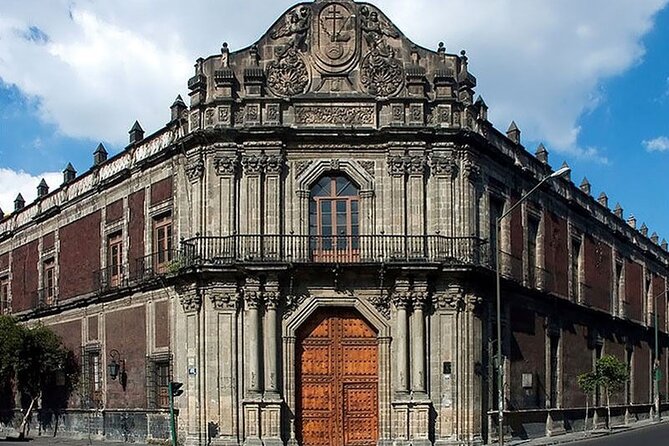
After the Inquisition-era stops, the route brings you to Antiguo Colegio de San Ildefonso from the outside. You see the area connected to the moment when Diego Rivera, described as being of Sephardic origin, met Frida Kahlo, described as having Ashkenazi origins.
That might sound like a culture detour, but it is not random. It is a reminder that Jewish ancestry and identity were not only medieval topics. The city also carries them into the stories of artists who became global symbols.
The tour then expands into Mexico’s political history. You learn about Mexican anti-Fascist movement support for canceling the first and only ever anti-Semitic national convention. You also hear about the reception as a refugee of Lev Davidovich Bronstein, better known as Leon Trotsky.
This section is a helpful bridge. It connects the earlier theme of persecution and control to the later theme of refuge and political resistance. Even though you are still in the Centro Histórico, the story jumps centuries, and the guide keeps it tied to what Mexico was choosing to do in different moments of modern history.
Plaza Loreto: Mount Sinai and Nidjei Israel in One Last Look
As you approach the end, you reach Plaza Loreto. Here, the tour points out the first purpose-built synagogue in Mexico, Sephardic Mount Sinai, and the neighboring first Ashkenazi synagogue, Nidjei Israel.
This is a satisfying shift in mood. You are moving from institutions of control to institutions of worship. You are also seeing how Jewish identity in Mexico City split into communities with different traditions, yet lived side by side in the same historic core.
The tour ends after this area, but it does not leave you with only theory. The places are visible, and the guide explains why they matter to the larger survival story.
Justo Sierra Synagogue: Seeing an Ashkenazi Shul That Still Tells Its Story
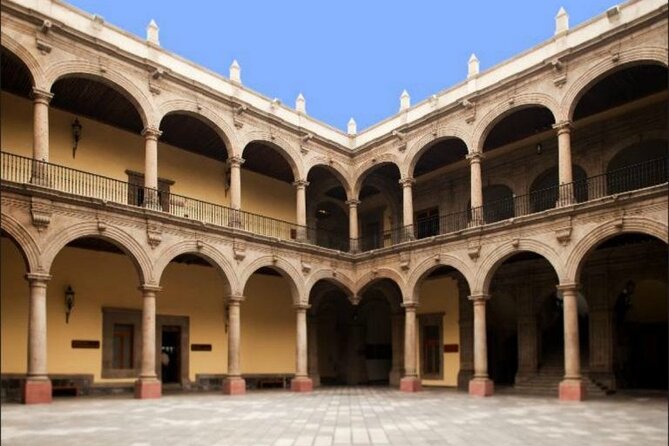
The final major stop is the Justo Sierra Synagogue, a decommissioned synagogue space tied to being the first Ashkenazi shul in Mexico. The experience here is straightforward: you visit the site and let its existence do the heavy lifting.
A decommissioned building has a different power than an active one. It is a reminder that communities changed, moved, and adapted over time. In a short visit, you get a clear sense of continuity and loss at the same time.
For many people, this is the moment the tour clicks. You have spent the morning learning about persecution, forced messaging, prison, and trade under watch. Now you are standing at a place that shows a community was here and building religious life, even when that life had to navigate hostile pressure.
Pacing, walking, and small-group comfort in 3.5 hours
The whole experience runs about 3 hours 30 minutes. It is short enough to keep energy up, but long enough for the guide to build a timeline instead of hopping randomly between landmarks.
The group size is capped at 10 travelers, and that shows in how the tour feels. The pace stays friendly, and it is designed for travelers with a moderate physical fitness level. You are moving between historic sites, but the route is not one long grind where you never stop.
You also get practical value from the way admissions work. Multiple stops are listed as free or with waived admission through agreements, so your money mostly funds the guide and the meaning of the stops, not extra ticket fees.
Price and value: Is $99 reasonable for this route?
At $99 per person, this tour is priced like a specialty walking experience with a strong guide focus. Considering the small group size, the English delivery, and the number of significant sites covered in a half-day, it generally feels fair.
Here is the realistic tradeoff: part of your time goes to the wider Spanish Inquisition and Mexican political context, not only synagogue specifics. If that is exactly what you want, the price starts to make sense. If what you really want is a tightly scoped Jewish-only hour with lots of extra detail and references, you might want to plan for that yourself with a book or two before you go.
A detail worth noting is that the tour can feel meaningful in a personal way, with Carlos described as bringing both historical context and a genuine connection to the story.
The one real drawback: fit
The most common mismatch is about focus. Some people want more names, dates, and source-like reading help, while others prefer a smooth story-driven walk. If you are in the first group, you can still enjoy this, but you may wish for more added reading suggestions as you go.
There is also the modern reality of sensitive historical topics. On rare occasions, plans can change due to safety discussions or health issues, so it helps to avoid booking this tour as the only cultural option on a tight schedule.
Should you book this walk?
Book it if you:
- want a small-group, English-guided story centered on Jewish survival in Mexico City
- like seeing how a city’s buildings reflect history, including the Spanish Inquisition legacy
- enjoy connections across centuries, from early Jewish presence to Mexico’s later anti-Fascist context
Skip it or add a backup plan if you:
- want a purely synagogue-focused, very detailed academic format
- need a tightly predictable schedule day-of, with no flexibility for last-minute changes
If you enjoy good storytelling, clear wayfinding through the Centro Histórico, and a tour that makes the city feel like one linked narrative, this is a strong pick.
FAQ
How long is the tour?
It lasts about 3 hours 30 minutes.
How much does it cost?
The price is $99.00 per person.
What language is the tour offered in?
The tour is offered in English.
What is the group size?
The tour has a maximum of 10 travelers.
Where do I meet, and where does the tour end?
You meet at República de Argentina 15, Centro Histórico de la Cdad. de México, Centro, Cuauhtémoc, 06020 Ciudad de México, CDMX, Mexico. The tour ends right in front of Loreto Park on the Justo Sierra Street side, near Justo Sierra 71, Centro Histórico.
Can I get a full refund if I cancel?
Yes. You can cancel for free up to 24 hours in advance of the experience start time for a full refund.
New reviews in from Mexico City
- Walking Tour in Historic Center CDMX★ 5.0 · 50 reviews
- Teotihuacan Pyramids and La Gruta Restaurant★ 5.0 · 50 reviews
- Sunrise Balloon Flight over Teotihuacan and Breakfast in Cueva★ 5.0 · 50 reviews
- Teotihuacan Private Tour, Cave Breakfast and Transportation★ 5.0 · 51 reviews
- Eat in a local house & access to restricted areas in Teotihuacan★ 5.0 · 51 reviews
- Guided tour to Teotihuacan, Basilica, Cave Breakfast and Pickup★ 5.0 · 52 reviews
- Museum of Anthropology: a look at Mexico’s past★ 5.0 · 52 reviews
- Coyoacán and Xochimilco including Frida Kahlo Museum★ 4.0 · 52 reviews
Mexico City Tours, compared.
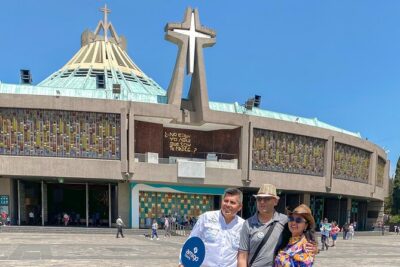
Teotihuacan, Guadalupe Shrine & Tlatelolco Day Tour with Lunch
Read our review →
Xochimilco, Coyoacan and Frida Kahlo with Optional Lunch
Read our review →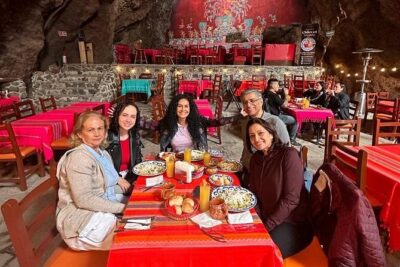
Balloon flight + Breakfast in cave + Pyramids + Pick up CDMX.
Read our review →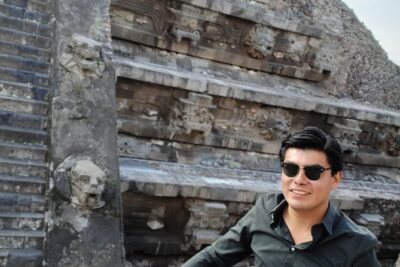
Teotihuacan pyramids morning or afternoon without tourist traps
Read our review →
Teotihuacan Early Access Guided Tour with optional Lunch
Read our review →
Balloon flight + pick up in CDMX + Breakfast in Cave + Pyramids
Read our review →
Teotihuacan & Guadalupe Shrine Tour with Lunch
Read our review →