
Reviewed · CITY TOURS
Mexico City: Anthropology Museum Tour with Historian
This tour is interesting because it helps you read Mesoamerica like one connected story, not four separate exhibits. You start with the museum itself, then move gallery to gallery with a guide who connects symbols, technology, and beliefs across time.
I especially like the way you learn to decode visual storytelling, from major stone monuments to smaller objects you’d otherwise overlook. I also like the pacing in a big museum, staying focused on the most important themes instead of wandering in circles with a map and a coffee you do not have.
One consideration: 3 hours is the official duration, and the museum is huge. If your group loves to ask questions, plan for it to run longer, and give yourself some buffer afterward.
Key things I’d prioritize before you go
- Small group of up to 10, which makes questions and close viewing easier
- An historian guide (Art Historian or Historian) to keep the interpretation grounded
- Headsets included, a big help in crowded galleries
- You get a connected Mesoamerica story, from Olmec to Maya without losing the thread
- Top-ticket moments are built in, like the Sun Stone and Pakal’s tomb replica
- English or Spanish, so you can match the tour language to your comfort
Why this museum tour works so well in Mexico City
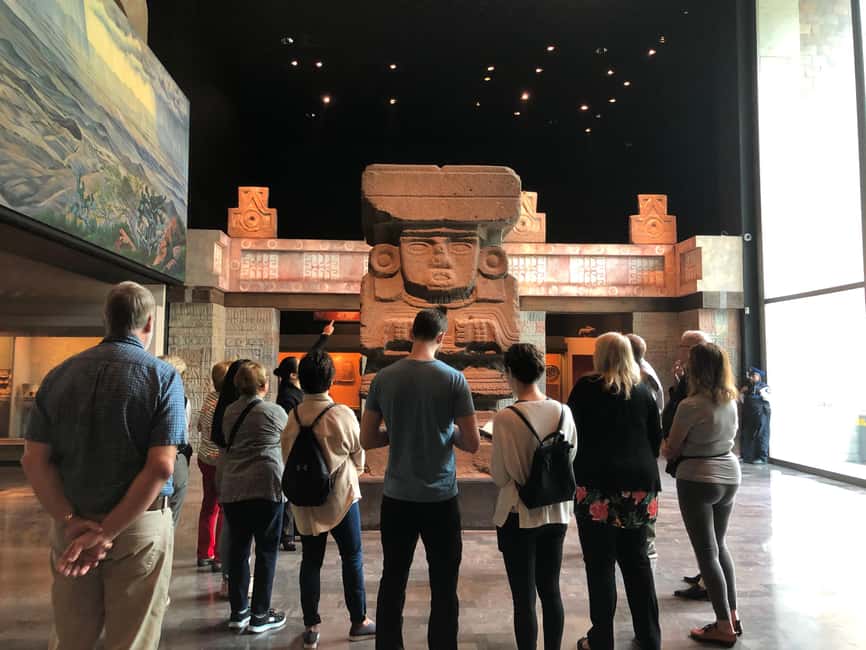
Mexico City’s Anthropology Museum is famous for a reason. The collections are world-class, but the museum is also big enough to overwhelm you fast. This tour solves that problem with a clear through-line. You do not just look at objects, you learn what they meant, how they were made, and why the same ideas kept showing up across different cultures.
What makes it especially worth your time is the “connected journey” approach. Instead of treating each civilization like a separate chapter with its own walls, you get explanations that link them. That matters because Mesoamerica was not isolated. Ideas traveled through trade, migration, shared agricultural techniques, and common religious calendars. Once you see those connections, the museum stops feeling like a list of civilizations and starts feeling like a single long conversation.
In past group tours, guides like Natalia and Hector have led the experience. Both are known for making explanations clear and even funny, without turning serious artifacts into a stand-up act. If you want your museum visit to feel like learning with someone who genuinely loves the subject, you will likely get that energy here.
More City Tours in Mexico City
- Mexico City: Teotihuacan, Tlatelolco & Guadalupe Shrine Tour
★ 4.6 · 3,773 reviews - Teotihuacan Hot Air Balloon Flight from Mexico City / Volare
★ 5.0 · 3,262 reviews - Teotihuacan Private Tour from Mexico City
★ 5.0 · 1,890 reviews
Start in the museum’s design and why it matters
You meet in the Anthropology Museum main lobby, near the ticket booth, and your guide waits with the WALK MEXICO logo. From the first minute, the tour frames the building as part of the learning experience.
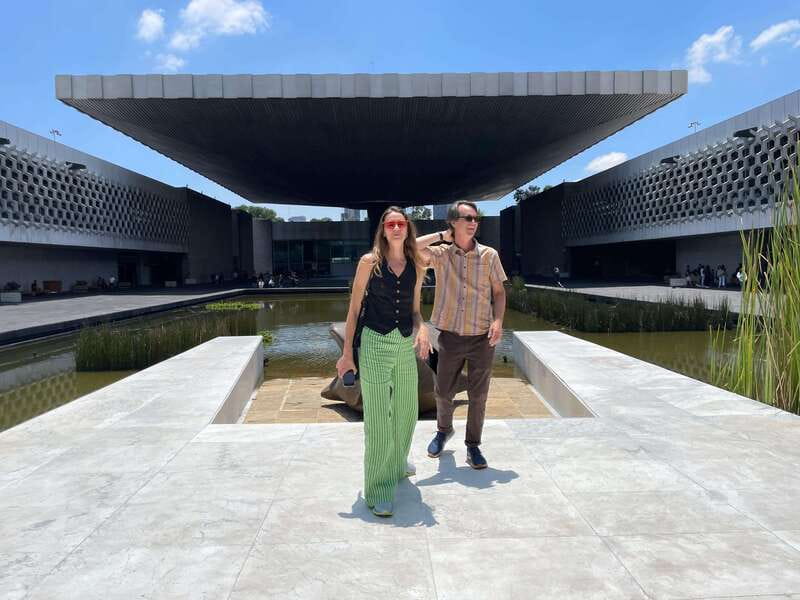
You begin with the museum’s architecture and origins, including how architects and artists collaborated. The point is not just to admire the building. It’s to understand that the museum is built to honor Mesoamerican cultures through murals, symbolism, and monumental replicas.
This is a smart way to begin because it sets expectations. You know you are not simply walking past random rooms. Each space is designed to carry meaning. If you go without a guide, you can still enjoy the collection, but you might miss how the museum’s design nudges you toward the bigger story.
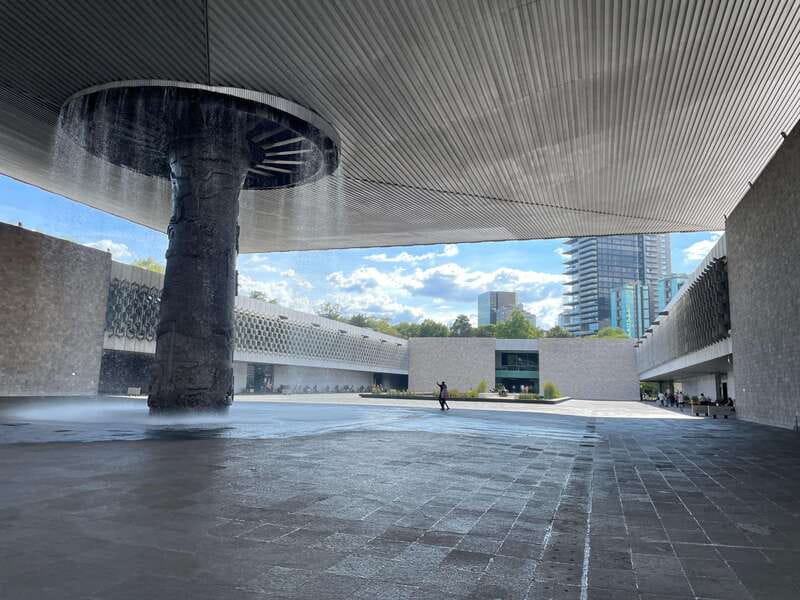
The iconic courtyard fountain, symbolism first
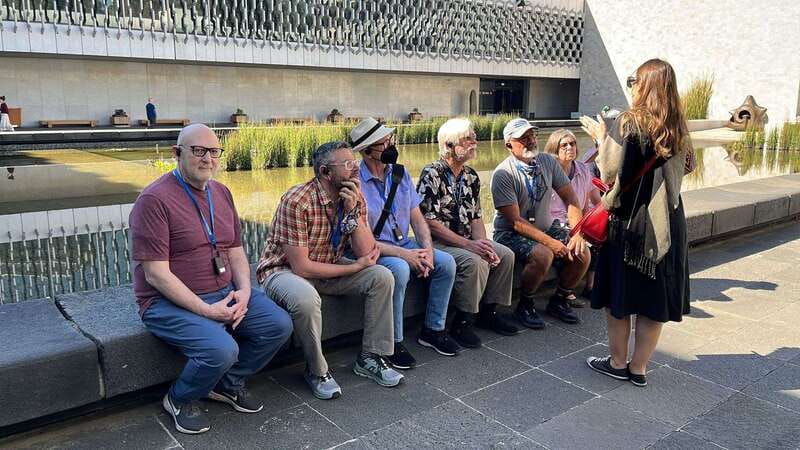
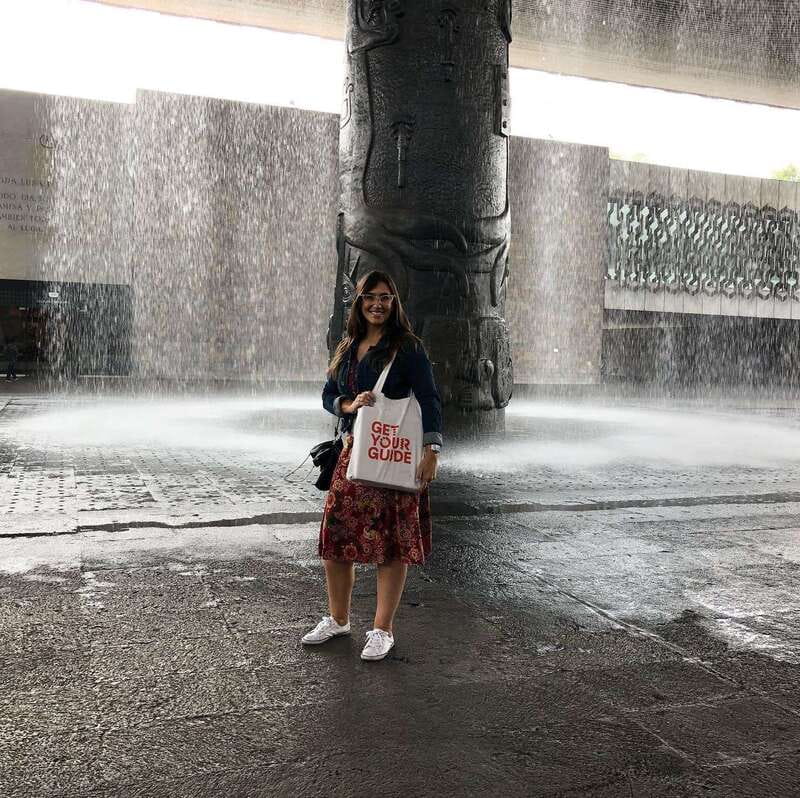
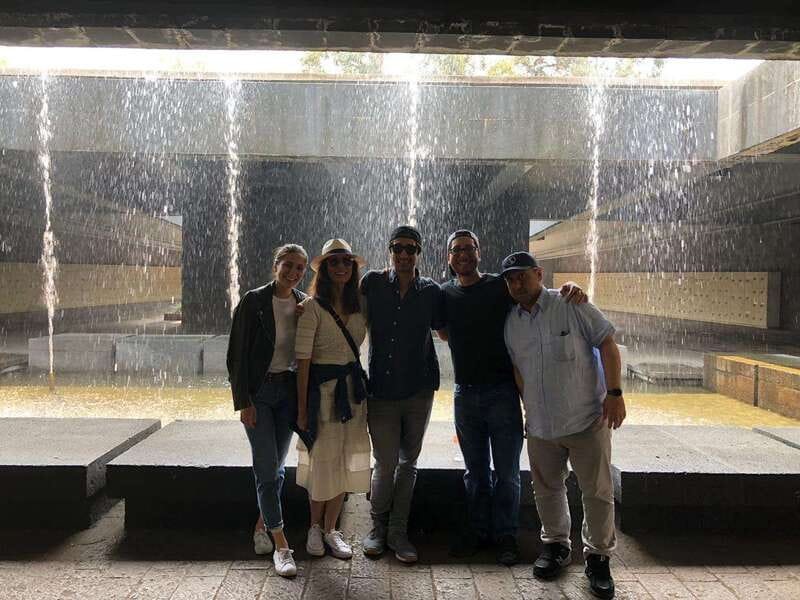
One of the most memorable moments is the museum’s famous courtyard fountain. You step into that space and talk through what the fountain represents. The symbolism is tied to monumental storytelling, which is a theme you keep seeing throughout the tour.
This stop is not just scenic. It teaches you how to look at the museum like a language. When you later see the Sun Stone or a colossal head, you have already been trained to ask, What is being communicated here?
If you are the type who loves “meaning behind the object,” this courtyard moment is a great primer.
What Mesoamerica means before you hit the galleries
Before you jump into major civilizations, the tour pauses for a key definition: what “Mesoamerica” means as a shared cultural region.
You learn Paul Kirchhoff’s definition, including the idea that distant peoples shared common traditions, agricultural systems, languages, and cosmological ideas. You also get the practical payoff of this explanation. Later, when you see objects that look different at first glance, you start noticing the shared logic underneath.
This is one of the most valuable parts for first-time visitors. Without it, the museum can feel like a set of separate timelines. With it, you start seeing patterns.
More Museums in Mexico City
- Chapultepec Castle & Anthropology Museum Tour
★ 4.5 · 1,348 reviews - Frida Kahlo VIP [Museum Tickets Included] Bike, Markets & Churros
★ 5.0 · 1,072 reviews - Anthropology Museum Guided Tour
★ 4.5 · 1,035 reviews - Frida Kahlo VIP [Museum Tickets Included] Walk, Markets & Churros
★ 5.0 · 982 reviews
Textiles, agave, and natural pigments: what everyday life reveals
In the textiles and materials section, you shift from monumental art to what people actually used. You look at looms, garments, and examples of spinning and weaving across Mesoamerica.
Then you get into agave and the real-world uses of the plant. The tour covers multiple uses, including fibers and tools and household items. Even if you have never thought about agave beyond tequila, this part makes the plant feel central to daily life, labor, and craft.
You also explore natural pigments and how dyeing works with organic sources. This gives you a useful lens: color and material were not random decoration. They were part of identity, status, and ritual.
This is also where you start understanding why the guide’s role matters. Objects that look “pretty” become evidence of technique, trade, and cultural identity.
Cultural blending: ritual attire and shared artistic identity
Next comes cultural blending, where you see ritual attire and ceremonial objects. The tour connects the dots between centuries of cultural exchange and how it shaped festivals, body decoration, and artistic identity.
This section helps you avoid a common mistake: assuming cultures were stuck in time, separate and unchanging. Here, you learn how contact between groups shaped what people wore and used, and how symbols traveled and transformed.
If you love costume details, this is a great stop. If you do not, you may still enjoy it because it’s a doorway into how people communicated meaning without needing modern explanations.
Olmec colossal head: why people call it a “mother culture”
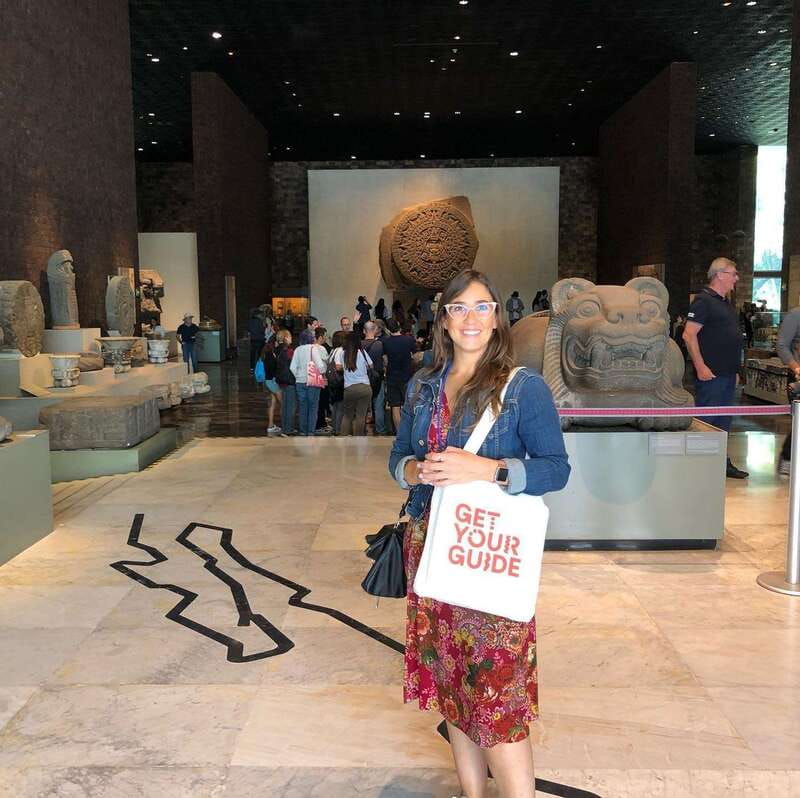
The Olmec gallery is anchored by an iconic piece, the colossal head. You learn why the Olmec are often considered a “mother culture” of Mesoamerica and how their influence reached later societies.
The key takeaway here is influence, not mystique. The tour connects artistic styles and religious concepts across time. That helps you interpret the scale and craftsmanship of the head as more than impressive sculpture.
If you are thinking, Is this just one famous artifact? The answer is no. It’s used as a springboard for explaining how cultural ideas can echo through later civilizations.
Mexica highlights: Templo Mayor, chinampas, and the real meaning of the Sun Stone
The Mexica section is packed with standouts.
You focus on major Mexica highlights, including the Templo Mayor and the famous “Aztec Calendar,” while also correcting its name and meaning as presented in the tour. You also learn about chinampas, artificial islands supported by bridges, aqueducts, and a hydraulic system. The tour includes a detailed scale model showing how Mexico City’s ancient landscape relates to what lies beneath colonial Mexico City.
This is where the museum becomes more than ancient art. It becomes engineering and ecology. Chinampas are not just a historical curiosity. They show how people shaped water management and food production, which then supported dense urban life.
Then, the Sun Stone ties the Mexica story together. You spend time decoding it as part of a visual language: symbols, myths, and public storytelling. Once you understand the “why,” you start seeing the Stone as a map of ideas, not only a striking disc.
One practical bonus: if you are tired or museum-fatigued, the intensity and clarity of this Mexica portion can reset your attention. It’s full of big moments, but still explained in a way that keeps the thread.
Teotihuacán as a multicultural metropolis
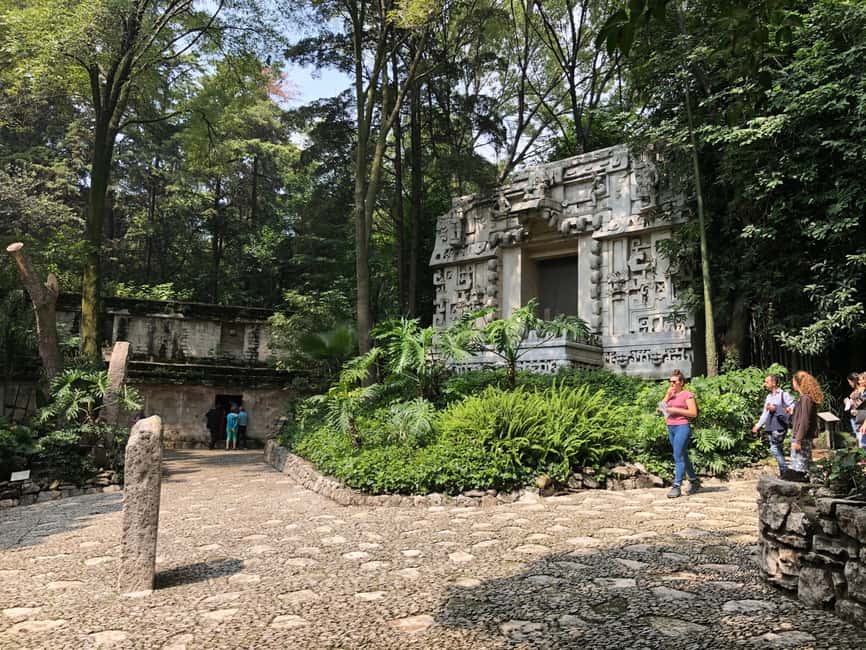
Next you go to Teotihuacán, framed in the tour as a multicultural metropolis. This matters because Teotihuacán is often talked about as if it were one culture with one story. Here, you learn theories about its rise and mysterious decline while staying focused on evidence inside the galleries.
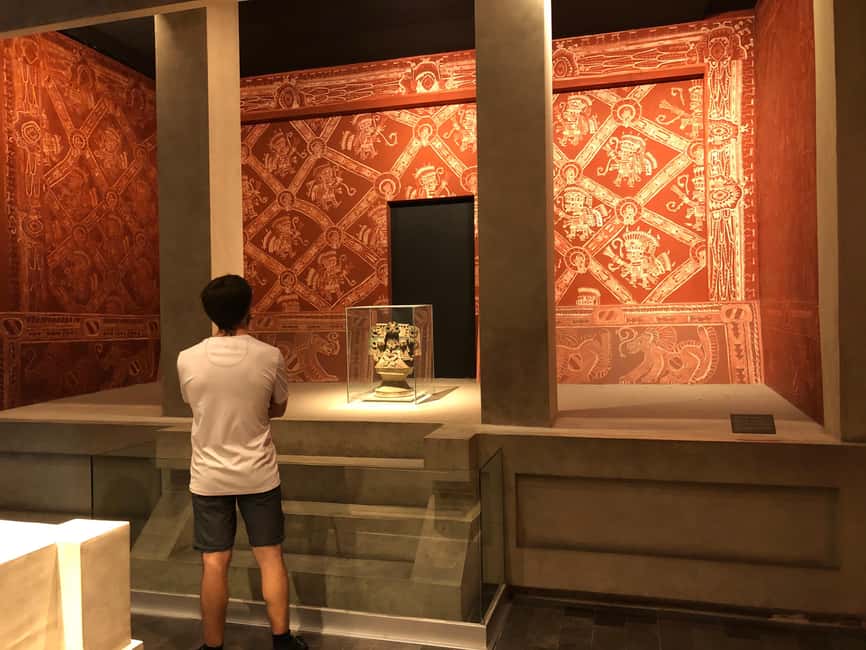
You admire refined ceramics, obsidian masterpieces, mural fragments, and colorful architectural replicas. The mix of materials is important. It shows a city with trade networks and skilled artisans, not only monumental building projects.
If you want a balanced view, this section is a good one. You get theories without pretending certainty where none is provided. Then you get to enjoy the craft and artistry as data, not just decoration.
Maya writing, art, and Pakal’s tomb replica
You finish in the Maya hall, where the tour becomes both dramatic and intellectually satisfying.
You see ceramic portraits, lively vessels, and jade carvings. Then the guide explains how Maya writing was deciphered. The story spans colonial archives, lost manuscripts, and the work of a WWII Russian soldier who played a key role in the deciphering process. It’s one of those narratives that makes a museum tour feel like a real detective story.
After that, the emotional high point: a replica of Pakal’s tomb. The replica is described as breathtaking and is treated as one of the museum’s most dramatic spaces.
The tour also includes the 1985 Christmas Eve museum heist story. You hear how Pakal’s mask and many treasures were stolen. That adds a modern chapter to an ancient story, and it makes you look at the artifacts with new context.
This ending works well because it combines three things you rarely get together in one museum visit: deciphered knowledge (writing), visual splendor (jade and portrait ceramics), and a real-world narrative (the heist).
Price and value: is $175 a fair deal for a 3-hour tour?
At $175 per person for a 3-hour experience, you want value that goes beyond a “quick highlights” loop. Here, the value comes from three places.
First, you get an expert guide with an academic background, either an Art Historian or a Historian. The tour emphasizes meaning and visual interpretation, not just dates.
Second, you get headsets. In a museum with crowds, that’s not a small perk. It helps you actually hear the guide’s explanations when groups get close to major objects.
Third, the tour connects multiple civilizations in one coherent narrative. If you tried to do this on your own, you could absolutely visit the same museum. But you would likely miss the links between symbols, technologies, and cosmology that the guide intentionally teaches.
My practical take: if you care about how cultures relate to each other, and you like structured learning in a big space, this price can feel fair. If you only want casual wandering and do not care about interpretation, you might prefer a self-guided visit and spend your time elsewhere.
Who this tour suits best
This experience is a strong fit if you:
- want to understand the meaning behind major artifacts, not just see them
- enjoy explanations tied to craft and real-world life, like textiles and agave
- prefer a small group so questions feel natural
- like a guided museum route that keeps you from getting lost in “gallery fatigue”
It is also a good choice for families, as long as you follow the rule that an adult must accompany children. The tour is offered in English and Spanish, which helps if your group has mixed language comfort.
Should you book this Mexico City Anthropology Museum tour?
Book it if you want your museum time to feel efficient and satisfying. The guide-led format is the point here. You get the museum’s symbolism, then you connect Olmec, Mexica, Teotihuacán, and Maya in a single arc that helps objects make sense.
Skip or rethink if you plan to spend most of your time photographing and wandering, and you do not want structured explanations. You can enjoy the museum without a tour, but you will get less of the “why this matters” framing that makes this particular experience feel worth the cost.
If you do book, go in with one mindset: look for patterns. By the time you reach Pakal’s tomb replica, you should feel like you’ve learned how to read the museum, not just how to visit it.
FAQ
Where is the meeting point?
You meet at the Anthropology Museum main lobby, near the ticket booth.
How long is the tour?
The duration is 3 hours.
What is included in the price?
The price includes an expert guide with a graduate academic degree (Art Historian or Historian), headsets to hear the guide for larger groups, and the museum ticket.
What is not included?
Food and drinks, transportation, and pickup or drop-off are not included.
What group size is this tour?
It is a small group with a maximum of 10 participants.
What languages are offered?
The tour is offered in English and Spanish.
Is the tour wheelchair accessible?
Yes, the tour is wheelchair accessible.
What does the tour focus on?
It focuses on connecting Mesoamerican cultures through symbols, myths, visual storytelling, and key objects and topics such as the Sun Stone, an Olmec colossal head, Teotihuacán, and Maya writing, ending with Pakal’s tomb replica.
Can I bring children?
An adult must always accompany children.
What is the cancellation and payment flexibility?
You can cancel up to 24 hours in advance for a full refund. You can also reserve now and pay later.
New reviews in from Mexico City
- Essence of Mexico: Authentic Mexican Cooking Class & Market Tour★ 5.0 · 289 reviews
- Teotihuacan Pyramids Morning Tour With Me, Angela!★ 5.0 · 290 reviews
- The City Green Exploring the Urban Eco Reserve of Xochimilco★ 5.0 · 290 reviews
- Mexico City E-Bike Tour with a taco and churros stop★ 5.0 · 292 reviews
- Teotihuacan Express Private tour from Mexico City★ 5.0 · 292 reviews
- Mexico City: Hidden Markets, Street Food & Salsa-Making Tour★ 5.0 · 310 reviews
- Xochimilco & Colonial Coyoacan Trip★ 4.0 · 312 reviews
- Street Food Tour with Friends★ 5.0 · 326 reviews
City Tours, compared.
Teotihuacan & Guadalupe Shrine Tour with Lunch
Read our review →
Teotihuacan, Tlatelolco & Guadalupe Shrine Tour
Read our review →
Teotihuacan Hot Air Balloon Flight from Mexico City / Volare
Read our review →
Teotihuacan Early Access Tour & Optional Lunch
Read our review →

Browse the lists this tour appears in