Reviewed · TOURS
Puebla: Cholula Magical Town Tour by Double-Decker Bus
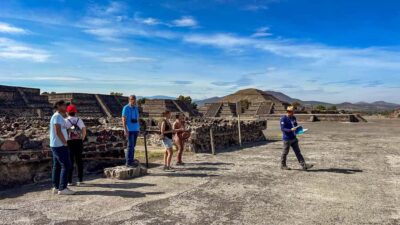
Cholula is one of those rare places where pre-Hispanic and Spanish Mexico sit on top of each other, and you can see it up close in a single half-day. I love how this double-decker bus makes the day feel easy, then lands you at the big visual payoff, the Great Pyramid of Cholula and the baroque church stops nearby. One thing to plan for, the pyramid admission is not included, so you will want a little extra cash and comfortable shoes for walking and steps.
The tour runs about 6 hours and starts in Puebla City at the Zócalo, then rides you into Cholula’s hills and between its key sights. You also get some free time at Cholula’s Zócalo at the end, which is great when you want to linger at the market or take photos without feeling rushed. The audio guide is Spanish, and while some guides may help in English, you should still be ready to rely on translation if you do not speak Spanish.
Key highlights at a glance
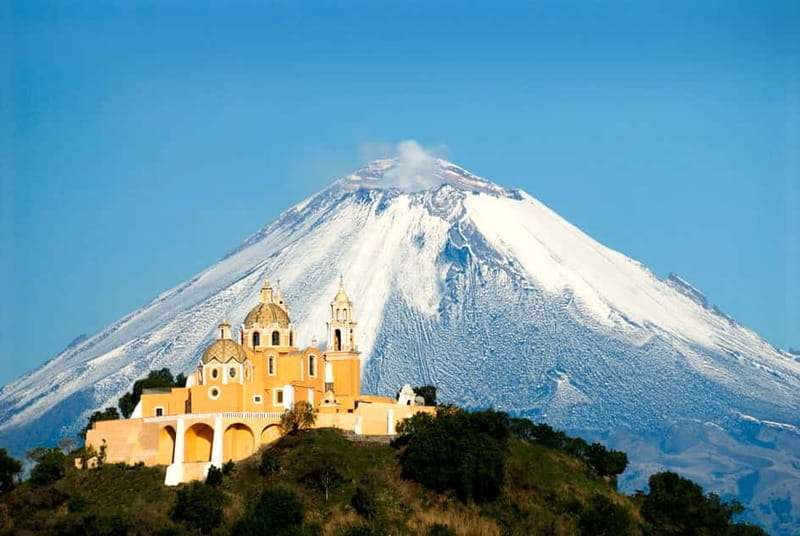
- Panoramic double-decker ride from Puebla into Cholula, with dramatic volcano scenery along the way
- Cholula’s Great Pyramid with the Temple of Nuestra Señora de los Remedios on top (ticket not included)
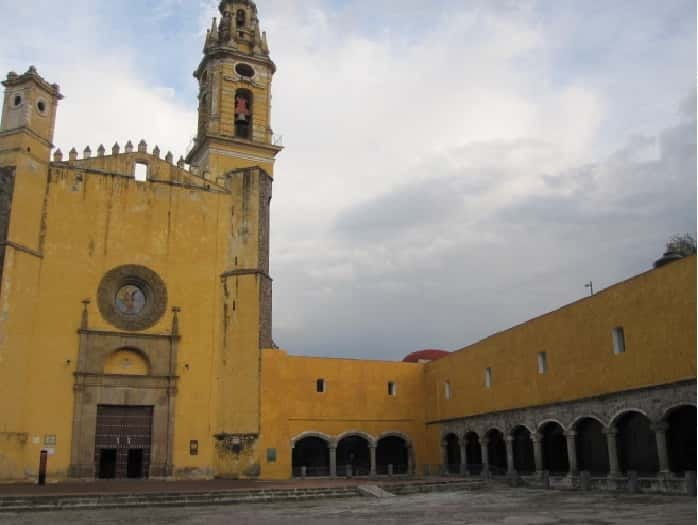
- Convento de San Gabriel at Plaza de la Concordia, a 1549 Franciscan site tied to older Quetzalcóatl ruins
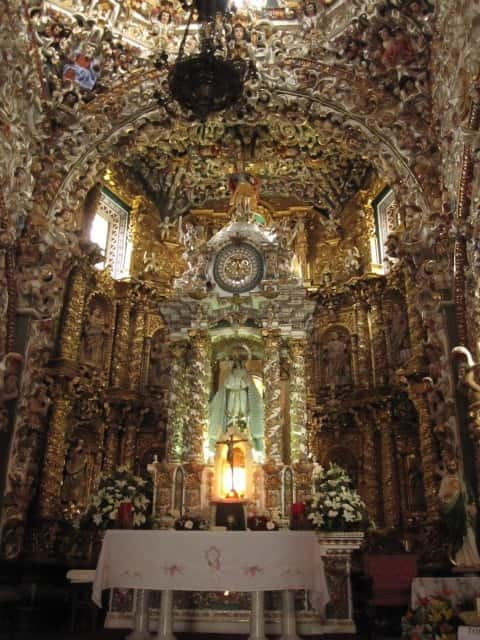
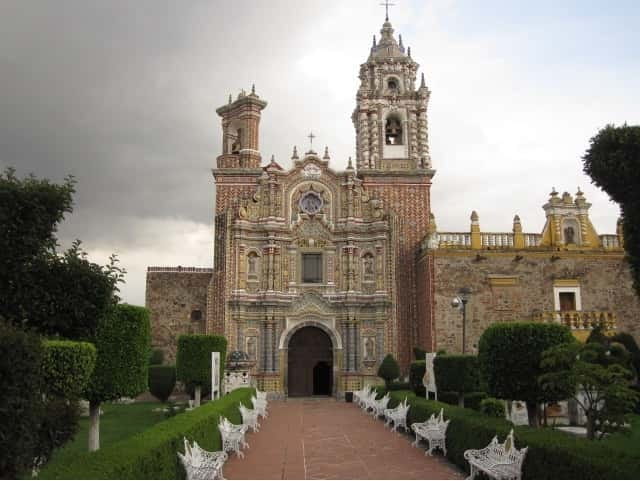
- Mexican Baroque overload at Santa María Tonanzintla and San Francisco Acatepec, where decoration covers nearly every surface
- Capilla Real with 49 domes, a standout stop inside the San Gabriel complex
- Low price for round-trip transport from Puebla, with free time to explore on your own at the end
Why Cholula feels like two worlds on one hill
What makes Cholula special is how layered it is. You are moving between places built by different cultures and faiths, and the buildings often feel like they are talking to each other across centuries. The tour also captures a real Cholula detail, San Pedro and San Andrés are so close that the border has basically disappeared, so you experience the area as one connected town.
The religious layering is especially clear around the big sites. At the Convento de San Gabriel, you visit a Franciscan complex built in 1549 on the site of ruins from a temple dedicated to Quetzalcóat. Then you see the Spanish temple on top of the Great Pyramid, again with a 1549 date in the mix. If you like understanding how history changes a place, this route helps you connect those dots quickly.
More Puebla options side by side
- From Puebla: Cholula and Atlixco Magical Towns Tour
★ 4.2 · 154 reviews - From Puebla: Guided Tour of Cholula
★ 4.9 · 78 reviews - Puebla: Walking Tour of Puebla City
★ 4.9 · 45 reviews
Puebla to Cholula by double-decker bus: the easy way to do it
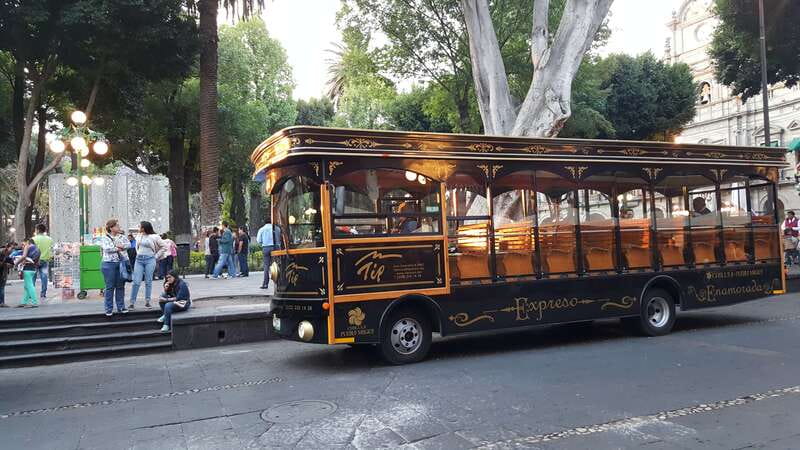
This is a practical tour design: you start at the Puebla Zócalo, meet the Tip Tours Dmc booth at Portal Hidalgo 14, and then hop on a traditional double-decker bus. The ride is short in distance, about 5 miles west, but the terrain and views make it feel like a mini escape. Because it is a double-decker, you get better sightlines than you would in a smaller van, especially early in the route.
The pacing is built around a sightseeing flow. You visit the Plaza de la Concordia and the Great Pyramid area first, then you transfer by bus to the baroque temple zone of San Francisco Acatepec and Santa María Tonanzintla. At the end, you come back through Cholula toward the San Pedro Cholula Zócalo for free time.
Two practical notes. Plan for sun, you are outdoors at multiple stops, and the tour asks you to bring sun block and a hat or cap. Also wear shoes you trust, because even when you are not climbing all day, you will still deal with uneven steps and church entrances.
Plaza de la Concordia and the Convento de San Gabriel: where the timeline shows up
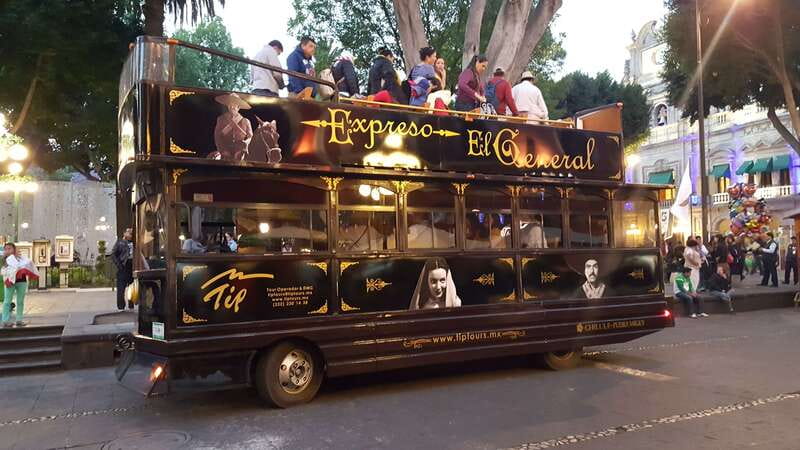
The first major anchor point is Plaza de la Concordia in San Pedro Cholula. The plaza sits next to the Convento de San Gabriel, a Franciscan complex built in 1549. The tour frames the site in a powerful way, the Franciscans built here on top of older ruins linked to Quetzalcóatl.
This stop is worth your attention because it shows you how the Spanish period took hold in Cholula. You are not just looking at one building. You are seeing a whole religious compound, the kind that shapes how a town functions for generations.
The highlight that really pulls you in here is the Capilla Real, known for its 49 domes. Even if you are not a church-architecture expert, those domes give you something concrete to look for, and they create that wow factor you remember long after the tour ends.
The Great Pyramid of Cholula and the Temple of Nuestra Señora de los Remedios
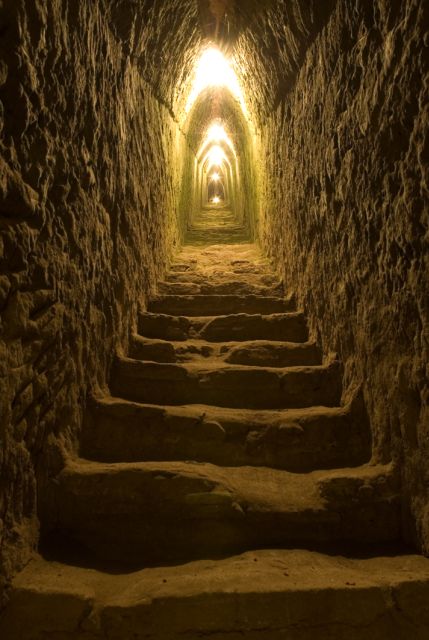
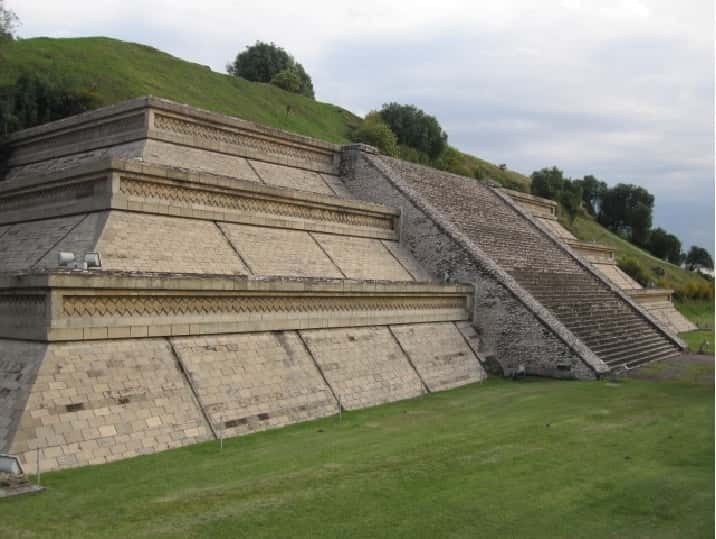
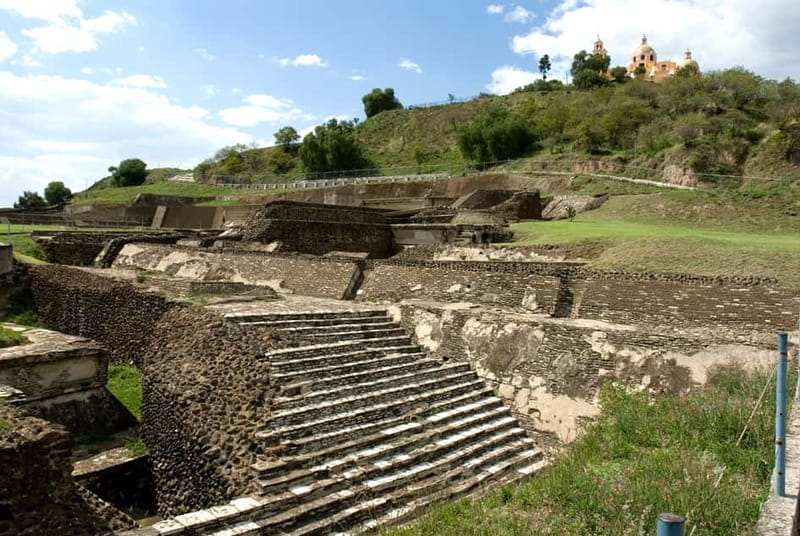
Next comes the big one, the Great Pyramid of Cholula, described as the largest pyramid in the world. The number alone is enough to get your attention, but what matters for your visit is what you can do with it on this tour.
You reach the top and see the Temple of Nuestra Señora de los Remedios, built in 1549 by the Spanish. From up there, you get that sense of scale that is hard to recreate from street level. You also get a clearer view of why Cholula is often described as a hill that holds entire neighborhoods, churches, and traditions in layers.
One key drawback to remember: pyramid admission is not included in the tour price. So while the $11 round-trip transport is a bargain, you should budget for the ticket when you plan your day. Also keep in mind this is not an easy stop for everyone. The tour is noted as not suitable for people with mobility impairments, which matters because getting around pyramids and church complexes usually involves steps and some climbing.
Mexican Baroque: Tonanzintla and Acatepec temple stops
After the pyramid area, you head toward the temples of San Francisco Acatepec and Santa María Tonanzintla. This is the heart of the Mexican Baroque experience on the route, and it is where the tour earns its reputation for making you stop, look closer, and slow your photos down.
The style is described as Mexican Baroque, and the practical takeaway is simple. You are going to see surface after surface covered in decoration, so your eyes will keep finding new details. The tour promises that there is no corner that has not been decorated, which is exactly how it should feel while you are there.
Here is how you get the most out of these stops. Instead of treating each church like a quick stop, spend a little time choosing one wall or doorway and tracing the details with your eyes. Then switch to another area once you feel you have the pattern. That way, the decoration does not blend together, and you actually notice the craftsmanship and symbolism.
Also, timing matters. These are not museum rooms, they are active places of devotion and artistry. If you want the best experience, give yourself a few minutes to settle before you start photographing, and keep your voice down when needed.
San Andrés Cholula parish and the walk between squares
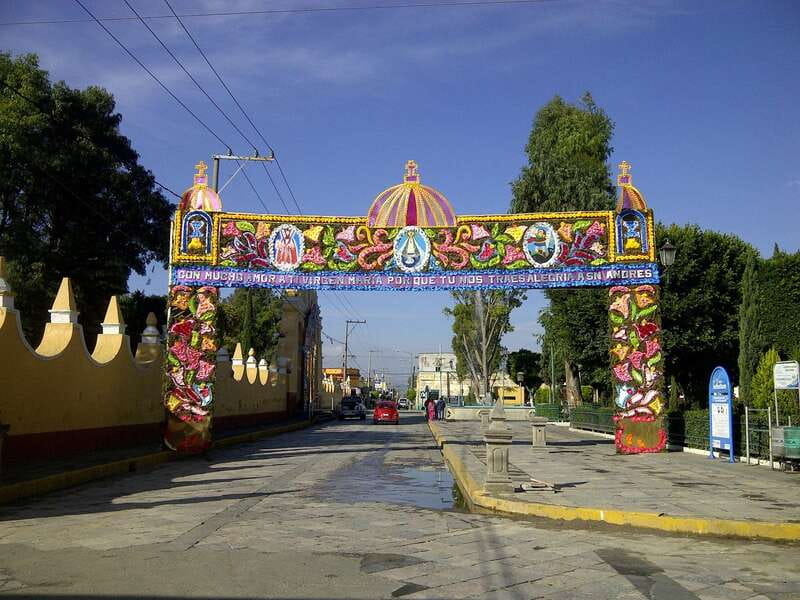
The route also includes a pause in San Andrés Cholula to visit the parish. This matters because it helps you understand Cholula is not just one landmark and a bus ride. You are sampling two main areas, San Pedro and San Andrés, that feel like one town because they are so tightly connected.
That short parish stop can be a nice reset after the big pyramid moment. You see another church, another square rhythm, and you get a sense of how everyday Cholula life wraps around the major tourist sights. Even if you only spend a few minutes there, it can make the day feel less like a checklist.
The Zócalo free time: market snacks, Royal Chapel, and a second look
At the end, you return to San Pedro Cholula’s Zócalo and get free time to explore. This is one of the best parts of the tour format, because it lets you choose what you care about most after seeing everything with the group.
During free time, you can revisit the Great Pyramid, check out the local market, and visit places like the Royal Chapel and the San Gabriel Convent and Concordia Plaza. That flexibility is valuable because it covers different travel styles. If you want more time with the pyramid view, you can take it. If you want to shop or snack, you can do that too.
You also get passing sights on the way, including the wizard’s house and the Copa de Oro cider factory. Those are quick looks from the bus, but they add local color to the route so the ride does not feel generic.
One more practical tip. If you plan to buy food, do it during your free time rather than trying to guess how long lunch will take during the guided portions. The tour does not include food or drinks, so you will want your own plan.
Price and value: what $11 covers, and what you pay for separately
At $11 per person for a 6-hour tour, the value is in the transport. You get round-trip transportation from Puebla City’s main plaza to Cholula, plus transportation insurance. You also get an audio guide in Spanish, and the day is organized so you can see multiple major sites without paying for separate rides.
What you pay extra for is straightforward. Admission to the pyramid is not included, and food and drinks are not included. That is not a surprise, but it changes how you should budget. You may start the day thinking of it as an $11 trip, then realize your real total includes the pyramid ticket and whatever you eat.
If you are staying in Puebla and want to do Cholula efficiently, this is one of the cheaper ways to string together the pyramid area and the Mexican Baroque churches in one go. If you already know you will pay for pyramid admission and you plan to buy your own meals, the trade-off is clear: you spend less on transportation and organization, and more on site entry and day-to-day costs.
Language, guide help, and what to do if you do not speak Spanish
The audio guide included is in Spanish. The driver is also Spanish. That means you should expect the written or spoken content to be Spanish-first.
That said, the experience can still work well if you do not speak much Spanish because the day is structured and the sights are visual. One feedback note points out that there was no English option in audio, and that a guest used Google Translate. Another note highlights that a bilingual guide was available to answer questions and provide context, and a separate mention praises an English-speaking guide who explained the history and culture in a way that stuck.
So here is your best move. Go in expecting Spanish audio, then bring a simple translation plan. If you have questions, you can ask in short phrases, and you can also rely on the visuals and the time at free stops to absorb what you can.
Also, there is a pattern in the feedback about a guide named Karla doing a great job. The praise includes making the significance of each church clearer, recommending where to eat and drink, and even pointing out chocolate at the market. If your group gets Karla, you likely get extra helpful storytelling and practical local tips.
Who this tour suits best, and who should skip it
This is a strong fit if you want an efficient, structured half-day in Cholula. You will cover the main pyramid viewpoint area, see baroque temples at Santa María Tonanzintla and San Francisco Acatepec, and get free time at Cholula’s Zócalo to roam.
It is also a good option if you like a mix of guided explanation and independent wandering. The bus handles the big transfers, but you still get time to choose what to revisit.
If you have mobility concerns, the tour may not be suitable, since it is noted as not suitable for people with mobility impairments. The combination of church areas and pyramid access usually involves stairs and uneven ground, and this tour does not advertise accessible alternatives.
Should you book the Puebla to Cholula Magical Town tour?
Book it if you want the biggest sights in Cholula in one organized 6-hour loop, at a price that stays low because the main cost is transport. You will likely be happiest if you are comfortable with Spanish audio, you can handle some walking, and you plan to pay for pyramid admission and your own meals.
Skip it if you need an English-only guided experience or if mobility is a concern for you. In that case, you can still visit Cholula, but you may want a different format with more tailored pacing and accessibility.
If you are on the fence, my vote is yes, especially for the mix of Great Pyramid access plus the Mexican Baroque church stops, then your own time back in the Zócalo to eat, shop, and take your time.
FAQ
How long is the Puebla to Cholula Magical Town tour?
The tour lasts about 6 hours, and it is usually available in the morning and afternoon.
Where do I meet for the tour?
Meet at the Tip Tours Dmc booth at the Puebla Tourism Office, Portal Hidalgo 14, Zócalo, Puebla, on Juan de Palafox y Mendoza Avenue.
What is included in the price?
Included are round-trip transportation from Puebla Zócalo to Cholula, a Spanish audio guide, and transportation insurance.
Is admission to the Great Pyramid included?
No. Admission to the pyramid is not included.
Are food and drinks included?
No. Food and drinks are not included, so plan to buy your own during the day.
What language is the audio guide?
The audio guide is in Spanish.
Is the tour suitable for people with mobility impairments?
No. The tour is listed as not suitable for people with mobility impairments.
What should I bring or wear?
Wear comfortable shoes, use sun block, and bring a hat or cap.
Are there rules about smoking?
Smoking is not allowed, including smoking in the vehicle and smoking indoors.
New reviews in from Puebla
- Puebla: Walking Tour of Puebla City★ 4.9 · 45 reviews
- From Puebla: Cholula and Atlixco Magical Towns Tour★ 4.2 · 154 reviews
- From Puebla: Guided Tour of Cholula★ 4.9 · 78 reviews
Tours, compared.
Chichen Itza, Cenote & Valladolid Tour with Tequila and Lunch
Read our review →
Teotihuacan, Guadalupe Shrine & Tlatelolco Day Tour with Lunch
Read our review →
Chichen Itza, Cenote & Valladolid Tour with Lunch
Read our review →
Early morning Chichen Itza Tour: Cenote and Tequila Tasting
Read our review →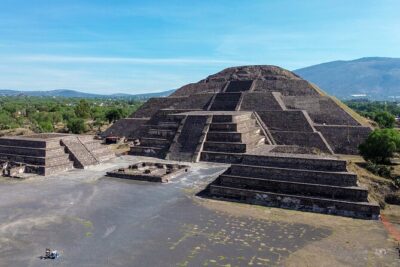
Teotihuacan Early Access Guided Tour with optional Lunch
Read our review →
Teotihuacan & Guadalupe Shrine Tour with Lunch
Read our review →